

Python Swallows the Styles-Kravitz Showmance Whole
From Everywhere to Nowhere: How Harry and Zoe’s "Romance" Vanished in a Puff of Gossip.

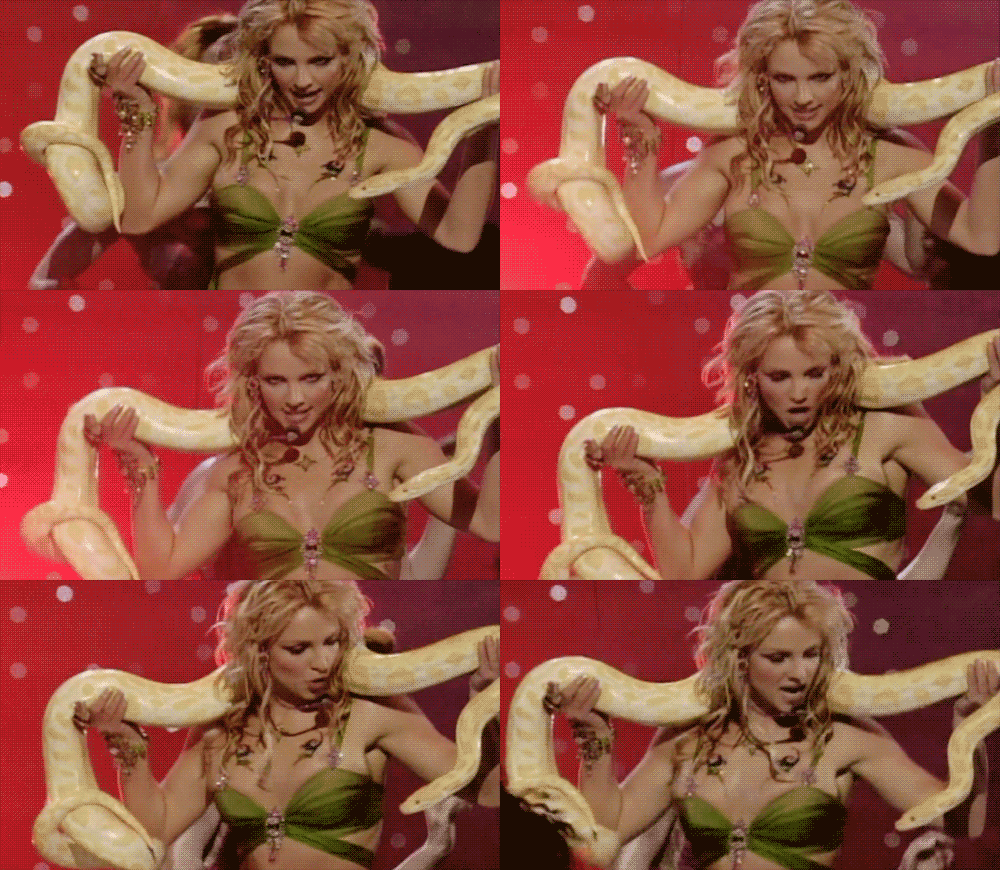
Hey there, welcome back to another juicy installment of Front Line! This time, we’re diving headfirst into the mysterious vanishing act of Harry Styles and Zoe Kravitz, who, for a hot minute, ruled hair-salon gossip with their totally-not-fake “romance” before pulling a Houdini into the foggy haze of yesterday’s news.
We’re here to unpack this mess, figure out what went down, and maybe have a laugh or two. Oh, and if you don’t want to miss a single post—because it’s life-or-death stuff—hit that glorious pink subscribe button below.
No red or blue wires to cross, just pure, clickable magic:
The stage is set, so let’s rewind and get into the chaos—starting with a little scene-setting, because I’m all about that kinky context.


Los Angeles on Fire: Taylor, Zoe, and a Burmese Python
Sounds like the unhinged sequel to Fear and Loathing in Las Vegas, right? Nope, just the “totally real” saga of Harry Styles and Zoe Kravitz’s “relationship” that vanished faster than my willpower at a gelato shop.
But before we dissect the disappearing act, let’s set the scene with some spicy context, because I can’t resist a good backstory.
This article didn’t just pop out of nowhere like a tabloid headline. It’s the result of weeks spent tracking this unlikely “ship”, with more revisions than the U.S. Constitution.
I was waiting for the perfect moment to drop it—specifically, that inevitable insider scoop from a source close to the couple (you know, the classic PR script) announcing “irreconcilable differences” or some poetic nonsense like a “pause” or “hiatus”. Directioners, you’ve heard this song before.
But that announcement? It never came, at least not from the usual suspects or in the standard format. Instead, the grim reaper of this situationship was none other than Taylor Swift, who casually dropped the tombstone on both the Styles-Kravitz romance and Zoe’s film Caught Stealing (2025, dir. Darren Aronofsky).
How? With one perfectly timed anecdote that shifted the entire narrative.
Let’s break it down.
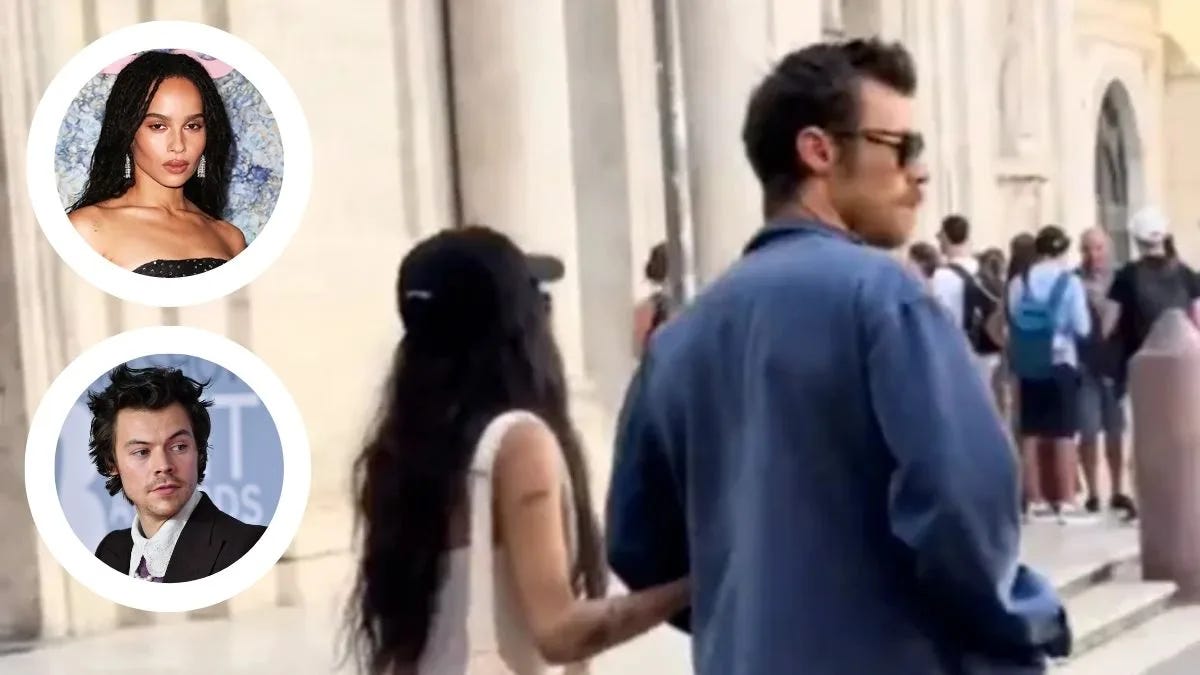
High-Res or Didn’t Happen
For a solid month, from August 25 to September 30, Harry and Zoe were everywhere—pro and amateur photos, sightings. Then, poof, on October 1, they vanish from the radar like they’ve joined the witness protection program.
Desperate fans, left high and dry, started churning out grainy, questionable photos and videos of “Harry and Zoe“ spotted all over Europe. None of it is real, verified, or even remotely convincing.
On October 9, The Sun claimed Harry and Zoe had “taken it to the next level” with Zoe moving to London for him to “film a movie”.
Problem? No recent photos backed this up, and there’s zero trace of this supposed London film.
A quick dig on Deadline reveals Zoe’s next project, How to Rob a Bank (set for release in fall 2026), was shot in Pittsburgh from June to August 2025—already wrapped. So, this London movie? Pure fiction.
And talk about perfect timing for this article—because Harry’s Pleasing brand is capping off its cross-country pop-up tour, the “Get Lost! The Pleasing Express Line”, with its grand finale in Philadelphia from October 10–12.
It’s almost too on-the-nose: after Zoe’s solo strut at the YSL Paris Fashion Week show at the end of September, radio silence on the “couple” front. No sightings, no leaks, nada. And here we are, with Pleasing’s last hurrah kicking off just as the stunt’s echoes fade.
So, we’ve got fans fabricating sightings and British tabloids spinning tales about nonexistent films.
The only credible tidbit? Taylor Swift’s anecdote about Zoe Kravitz and her Burmese python, which every outlet from here to the Moon and back gleefully amplified.
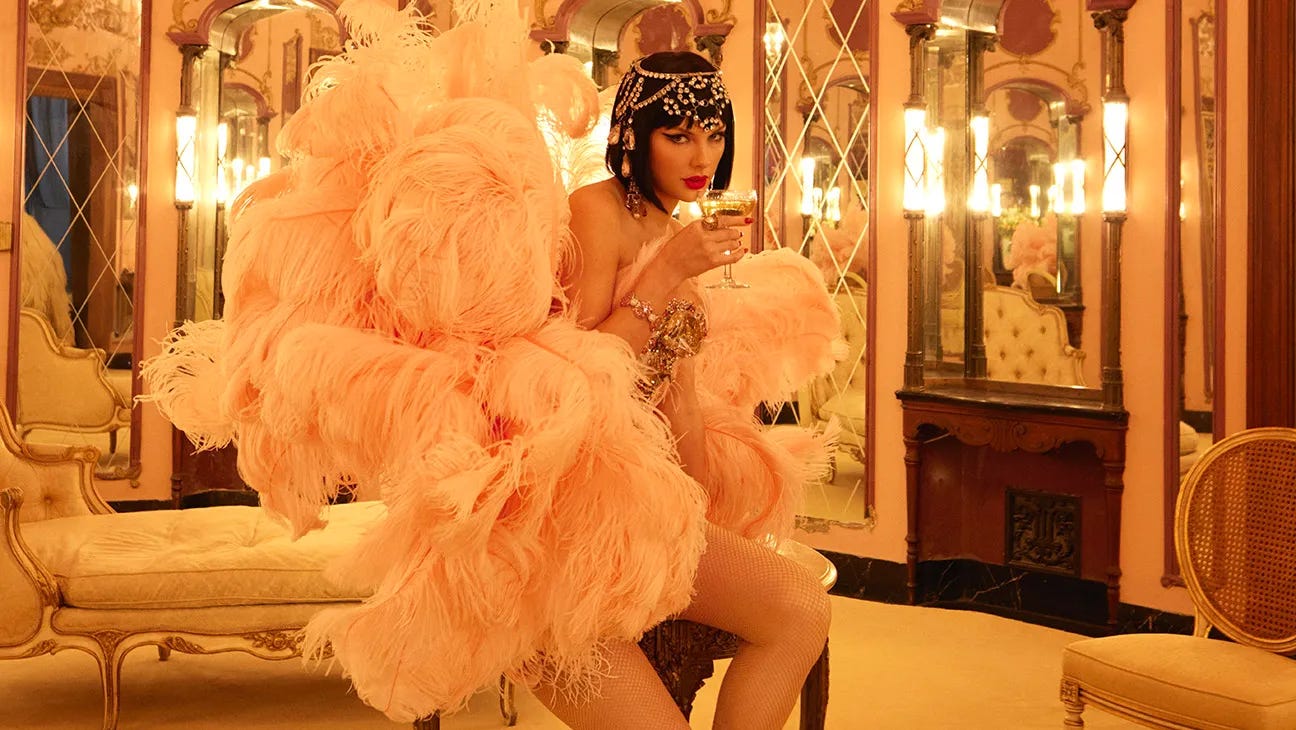
There’s Always a Siren Singing You to Shipwreck
So, what’s the deal with Swift’s python anecdote, The Sun’s baseless article, and the sudden disappearance of our star-crossed “lovers”, Harry and Zoe? These three events might seem unrelated, but they don’t mark the end of the stunt—they show it splintering into chaos.
No single director is calling the shots anymore. Instead, we’ve got a cast of players chasing their own agendas, sometimes at odds but all tied to one brutal fact: the stunt’s core mission, to save Caught Stealing’s box office, crashed and burned.
By October 2, 2025, Box Office Mojo stopped updating Caught Stealing’s numbers, just before its sixth weekend. Why? Sony, the distributor, quit reporting daily figures as the film’s earnings dipped below $50,000 a day, signaling its premature exit from theaters (originally slated to run through mid-October).
A film dropping below $50,000 daily typically indicates it’s no longer viable, prompting distributors to pull it early to cut losses.
This failure shattered the stunt’s centralized playbook. With no unified goal (promoting the film), every player started scrambling for their own win.
The top priority? Detach Zoe Kravitz’s brand from the toxic wreckage of the movie and the stunt itself.
The “couple” was erased the moment the film was declared DOA. Why? Tying an actress’s name to a confirmed flop is brand poison. The media blackout and physical disappearance were a deliberate quarantine, designed to put a safe distance between Zoe and the failed “product”. The order was clear: “Cut ties and make her vanish until the film fades from memory”.
Enter Taylor Swift, whose perfectly timed python anecdote was a PR lifeline. Dropped during the media frenzy of her The Life of a Showgirl album launch (October 3, 2025), it repositioned Zoe like a pro. The snake story unhooked her from the sinking ship of the stunt and hitched her to Swift’s unstoppable media juggernaut. It was a masterstroke to keep Zoe relevant, rewriting her image from “Harry’s girlfriend“ to “quirky, badass it girl“.
Somebody Told Me You Have a Techno Boyfriend
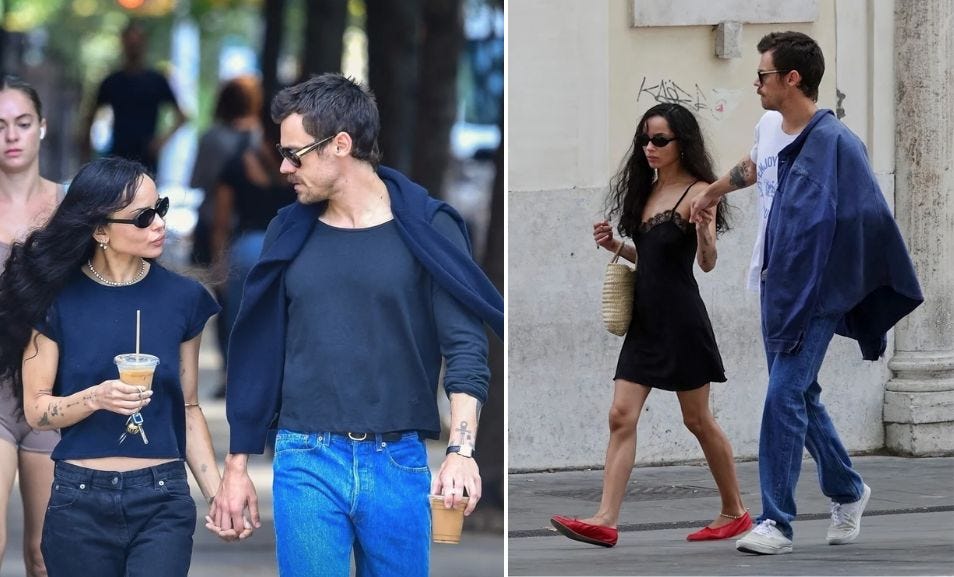
Now, let’s talk The Sun. On October 9, the British tabloid dropped a “bombshell” claiming Zoe had moved into Harry’s London pad. Why? To fill a gaping news void created by the Taylor Swift hurricane.
Swift’s album launch, a quintessentially American cultural phenomenon, dominated U.S. media with obsessive coverage—lyric breakdowns, reviews, juicy anecdotes. Sure, it was global news, but the U.S. market owned the frenzy.
For UK tabloids like The Sun or Daily Mail, who thrive on exclusive, homegrown gossip, that week was a snooze-fest. Stuck chasing a story ruled by their U.S. rivals, they were left in the dust, scrambling for local relevance.
For a savvy editor, this is unacceptable. They needed a bold, British-exclusive scoop to claw back their audience. And what’s more reliably British (and click-worthy) than Harry Styles? Dropping a “cohabitation” bombshell was the perfect play to carve out a local narrative and steal some spotlight.
These seasoned tabloid pros don’t need an official leak to spin a tale. They know the stunt’s script by heart: after the meet-cute and passion phase comes the “serious” stage: cohabitation. They’re just writing the next chapter of a fiction they’ve memorized.
And when the “pause“ announcement inevitably drops—mirroring the low-key breakup reveal with Taylor Russell (2024, via The Sun) rather than the high-drama Olivia Wilde split (2022, via People)—it’ll come from a peripheral outlet like The Sun to slip under the radar, not a megaphone like People.
But now, let’s get to the recap of why this whole stunt went belly-up!

Rewind: The Showmance Setup
In my previous piece, we dissected the launch of this publicity stunt: its kickoff, the media’s role, the evolution from grainy to crystal-clear paparazzi shots, and the shifting demeanor of our two stars.
We also spotlighted the marketing missteps that doomed this campaign and pinpointed who’s to blame for its flop.
Now, we’ll track how the strategy pivoted after the September 6 leak, Harry’s behavioral and style overhaul, the couple’s Roman and Paris holiday, and the sharp-eyed reactions from Styles’ fanbase, those close readers who see through the smoke and mirrors.
And most importantly, we will see if this stunt had a significant impact on the promotion of Zoe Kravitz's movie.
Box Office Gambit: The Numbers Tell the Tale
First, we’ll revisit the definitive box office figures for Caught Stealing’s first and second weeks. Still, this time, we’ll do more, cross-referencing them with the release of paparazzi shots and mainstream media coverage.
The shooting schedule spanned from September 3 to 6 in New York, September 11 at the airport, and September 12 in Rome.
A total of six days. The agency behind the photos was consistently Backgrid.
By aligning the data with these events, we can draw precise conclusions.
The Key Takeaway: No Weekend Impact
The first weekend (August 29–31) saw the film gross $7.85 million.
The second weekend (September 5–7), in the thick of the stunt’s media storm, brought in $3.29 million. A 58% drop.
In the film industry, a 50–60% second-weekend decline is standard, if slightly underwhelming. The massive PR campaign failed to bolster the film’s staying power. The audience bleed was typical for a movie with mediocre word-of-mouth. The stunt didn’t sway anyone to buy tickets.
There were slight slowdowns or upticks on some weekdays (e.g., a 40% bump on Tuesday, September 9).
These bumps, however, are statistically negligible. An $85,000 increase is a drop in the bucket against a $40 million budget.
They show the media buzz had a minimal, fleeting effect but never sparked mass interest.
The Pincer Strategy Flop of September 6
Saturday, September 6, was the campaign’s high-water mark: photos of Styles/Kravitz paired with Butler/Ratajkowski shots. Yet, the Saturday-to-Friday gain (+21%) was smaller than the first weekend’s (+35%).
Even doubling the stunt firepower failed to ignite significant interest.
Box Office Mojo data, cross-referenced with the paparazzi photo timeline, delivers the definitive proof: the strategy was a commercial failure. The buzz didn’t translate into ticket sales.
The campaign activated an audience (Harry Styles fans, gossip readers) that, due to a profound psychographic mismatch, didn’t convert into paying viewers for this type of film.
Let’s Do the Math
To gauge a stunt’s success, we shouldn’t just compare Saturday to Friday but use two sharper metrics: the weekend-to-weekend percentage drop and the Saturday-to-Saturday comparison.
Weekend-to-Weekend Drop: The primary indicator of a film’s health, comparing the second weekend’s total gross to the first.
First Weekend (Aug 29–31): $7.85 million
Second Weekend (Sep 5–7): $3.29 million
Drop: -58%
A 50–60% drop is industry-standard, signaling a film performing as expected—neither a hit nor a disaster.
If the stunt had worked, we’d see a lower drop (-40%), indicating strong word-of-mouth and new audiences drawn by the buzz.
The -58% confirms that, despite the media noise, the film lost viewers at a wholly predictable rate.
Saturday-to-Saturday Comparison: The second metric pitting the stunt Saturday against the prior one.
First Saturday (Aug 30): $3.1 million
Second Saturday (Sep 6): $1.34 million
Drop: -57%
Here, too, the decline aligns with the film’s overall trend. Despite the “double push” of Styles/Kravitz and Butler/Ratajkowski, the film earned nearly 60% less than the previous Saturday.
The “surge” on September 6 isn’t notable because $1.4 million is low in absolute terms but because it fails to disrupt the film’s standard, predictable decline.
The stunt generated massive online buzz (as seen on Google Trends), but the box office data proves this didn’t translate into meaningful ticket sales. Gossip enthusiasts weren’t invested enough to hit the theaters.
Thus, despite that daily spike, the final verdict is clear: from a commercial standpoint, the operation was a bust.
Paparazzi Playbook: The Scheduled Shots
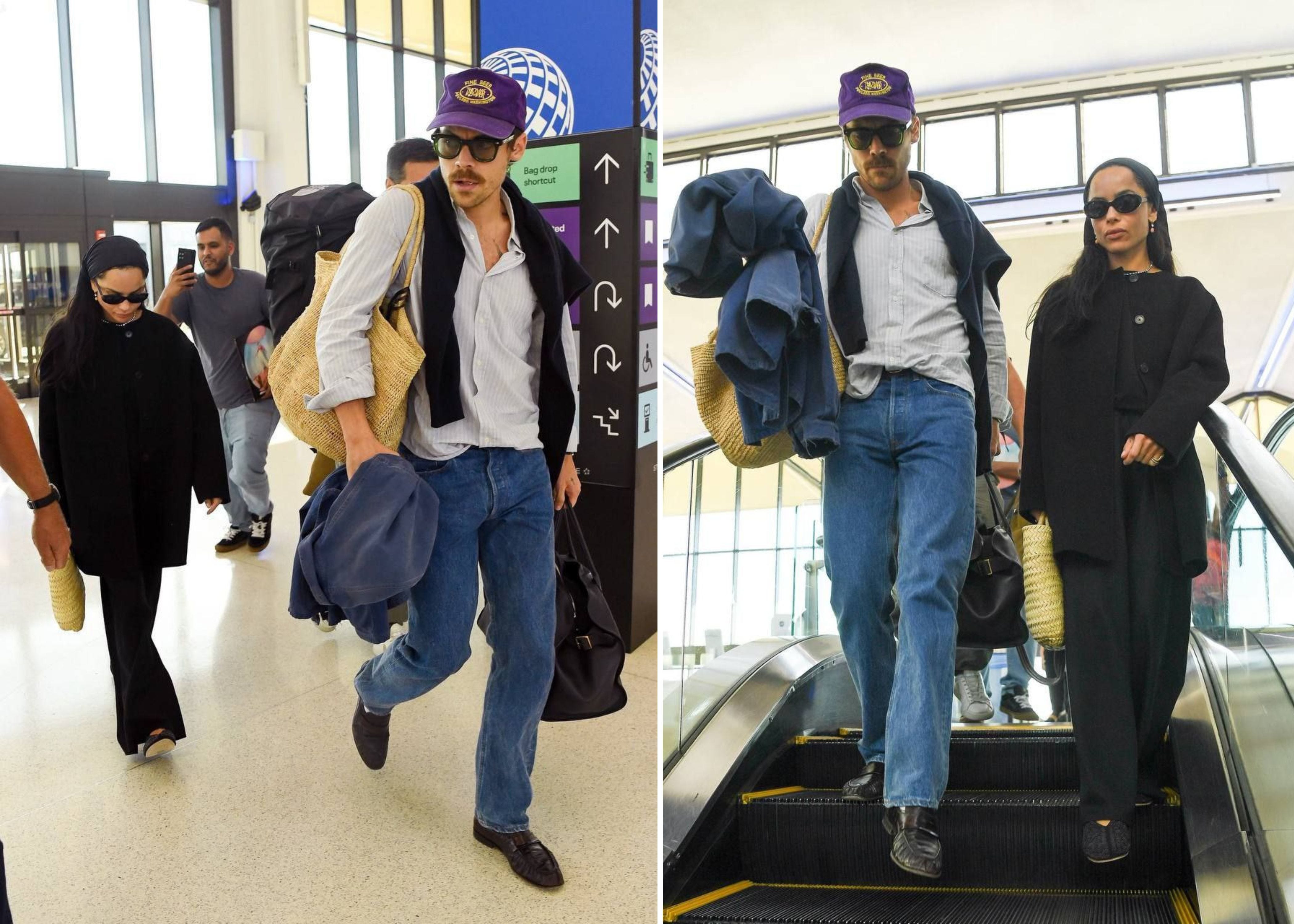
As we’ve outlined, the paparazzi days were split as follows: four days for various New York strolls (September 3–6), with September 6, the second Saturday of the film’s run, featuring the lunch with Lenny Kravitz.
One additional day documented the departure from Newark Liberty International Airport to close the New York narrative arc.
In these posed New York photos, Harry’s trusty toothpick makes its debut, a constant companion during high-stress moments.
Some speculated it was a barrier to unwanted kisses, but that’s flimsy; he could easily remove it. More likely, it’s a coping mechanism, a physical tic to manage the strain of performing under scrutiny.
Roman Holiday, Reality-Show Style
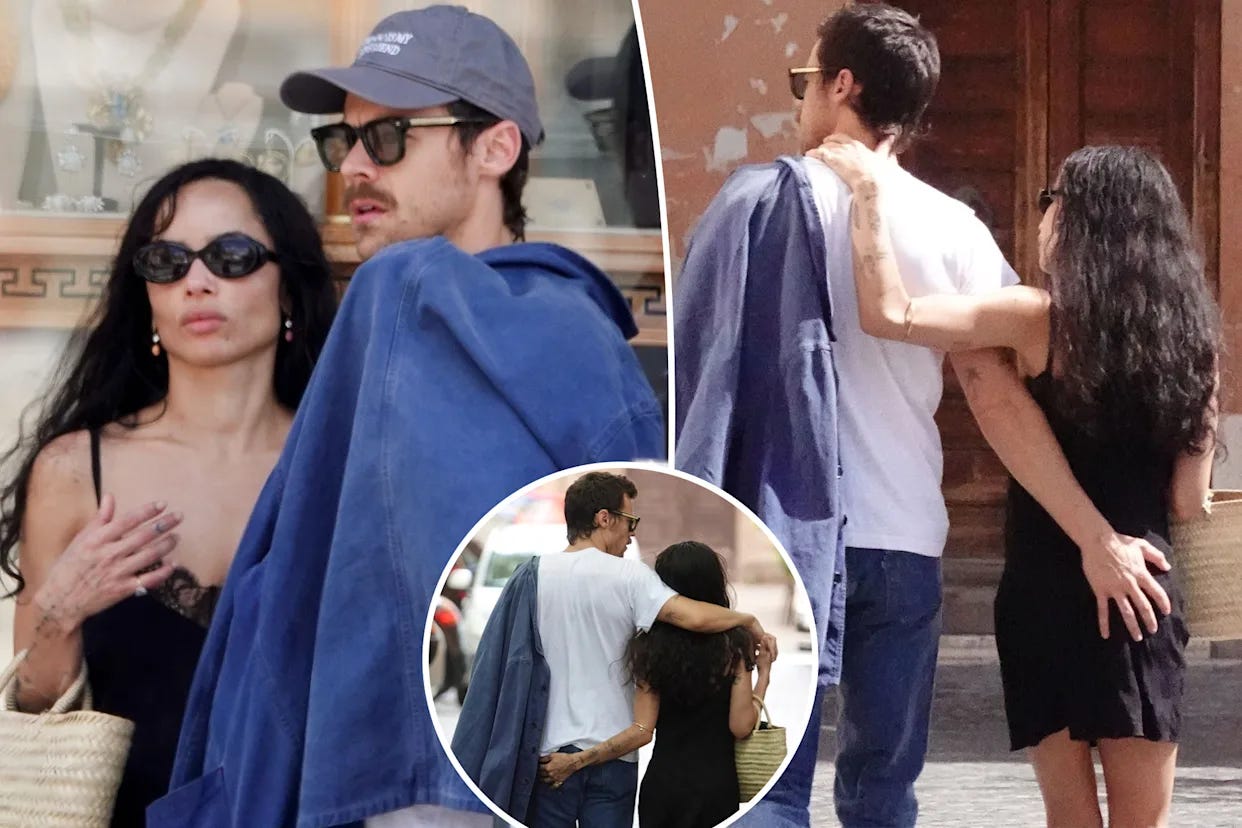
Arriving in Rome on September 12, the story didn’t get more authentic, but more polished.
Think of Rome as the romantic backdrop for a low-budget reality show, like a Bachelorette date in a picturesque locale.
The couple’s gestures shifted: gone was the awkward, stiff New York vibe of two strangers trying to fake chemistry.
In Rome, the direction stepped up, with overt moves—hand sliding to the hip, a visible pat, playful pinches—that screamed passion but reeked of rehearsal, like a wedding album shoot where amateurs overact affection.
It’s a performance built to be photographed, shouting, “Look how in love we are!”
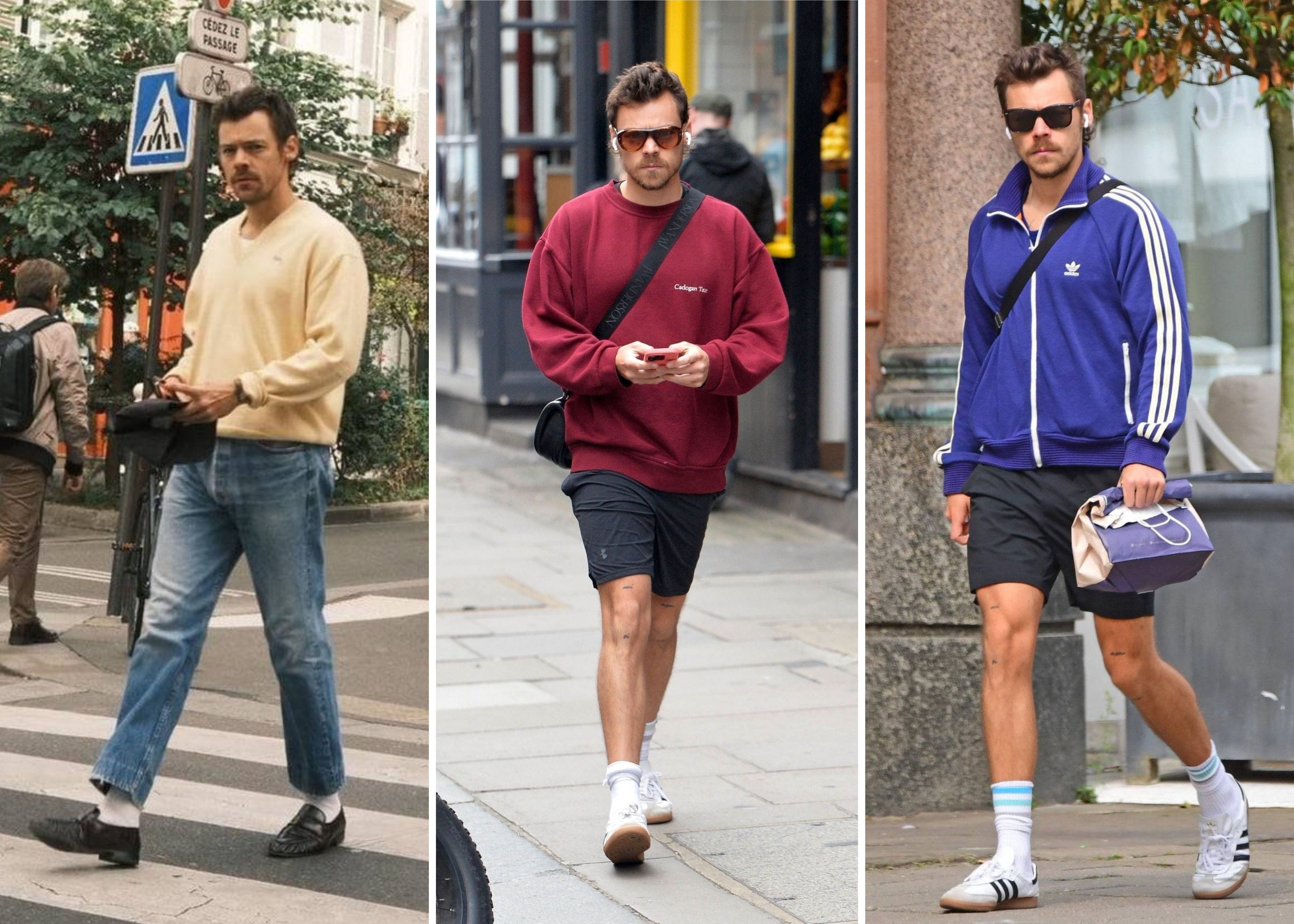
Harry, the Chameleon
Across New York and Rome, everyone, fans, casual observers, even my hairdresser and the gas station guy, noticed Harry’s transformation.
His knack for spotting a smartphone camera from a mile away vanished. He now strolls past professional paparazzi like they’re invisible.
It is not instinctive behaviour, but that of an acting pro on a film set, aware of the cameras but playing oblivious to preserve the fourth wall.
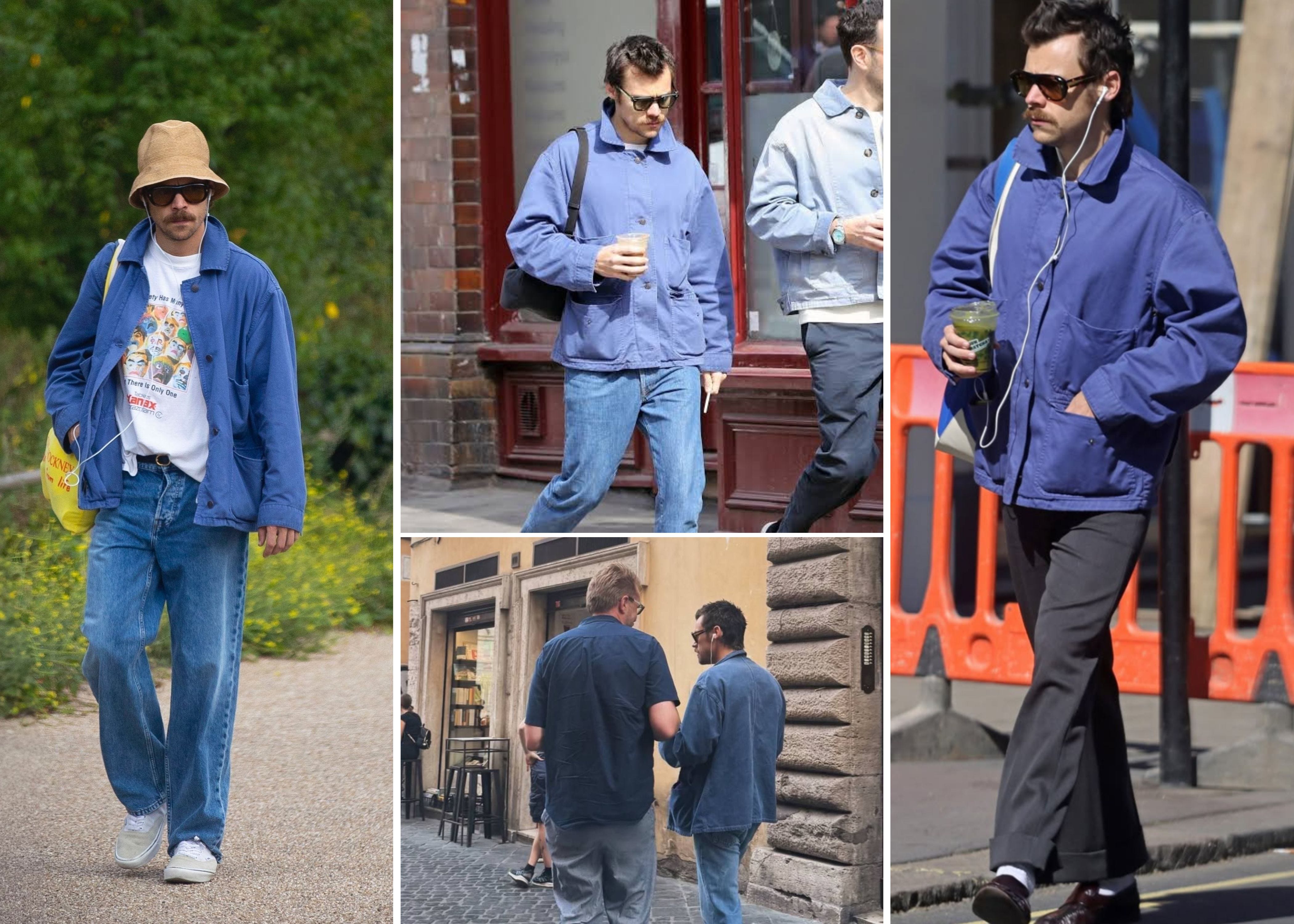
His style also flipped. Gone was the anonymity uniform: long-sleeve blue, sunglasses, baseball cap, hiding tattoos to make photos less marketable.

In its place: bold Gucci fits, branded looks, bare arms, outfits dissected in fashion mags with price tags attached. The shift screams strategy: from dodging the spotlight to courting it.
The Staged Frame: Timing and Sources
Patrick O’Brien (Paddy), Harry’s longtime bodyguard, is a walking press release confirming the stunt’s artifice.
Normally, a bodyguard shields you from crowds and cameras. Here, in a choreographed setup with invited paparazzi, Paddy’s role morphs from protector to facilitator, part of the production crew.
His earpiece and phone suggest a coordinated team, with security managing the perimeter or, more likely, a PR handler syncing with photographers to capture the planned shots.
The production’s direction isn’t just evident in the on-the-ground security management but in two logistical details that lay bare its choreographed nature: the timing of the photo releases and their singular source.
The images, whether from New York or Italy, were consistently dropped around 9:00–10:00 PM Italian time, aligning with 3:00–4:00 PM in New York.
This window is a strategic linchpin for the U.S. media market, hitting the peak of the East Coast’s afternoon news cycle. People are still at their desks but mentally clocking out, primed to scroll news sites and social media. Releasing at this hour lets the story dominate evening chatter online, remaining fresh as the West Coast (Los Angeles) hits its own afternoon peak.
In short, the timing is a calculated marketing move to maximize visibility and impact in the most critical market: the American one.
Even more telling is the source: nearly all images stem from a single agency, Backgrid. This rules out the chaos of competing paparazzi hunting for shots and confirms a collaborative pact.
The PR team feeds an exclusive tip to a trusted agency, which secures a high-value product for global distribution, ensuring near-total control over the staging in return.
The precise timing and singular source are the final proof, transforming supposed candid sightings into a commissioned, produced, and distributed photo shoot governed by the rules of a marketing campaign.
The outcome is a clean, professional, mutually beneficial operation. The agency gets an exclusive, guaranteed product. The PR team secures maximum media coverage while maintaining near-complete control over the show.
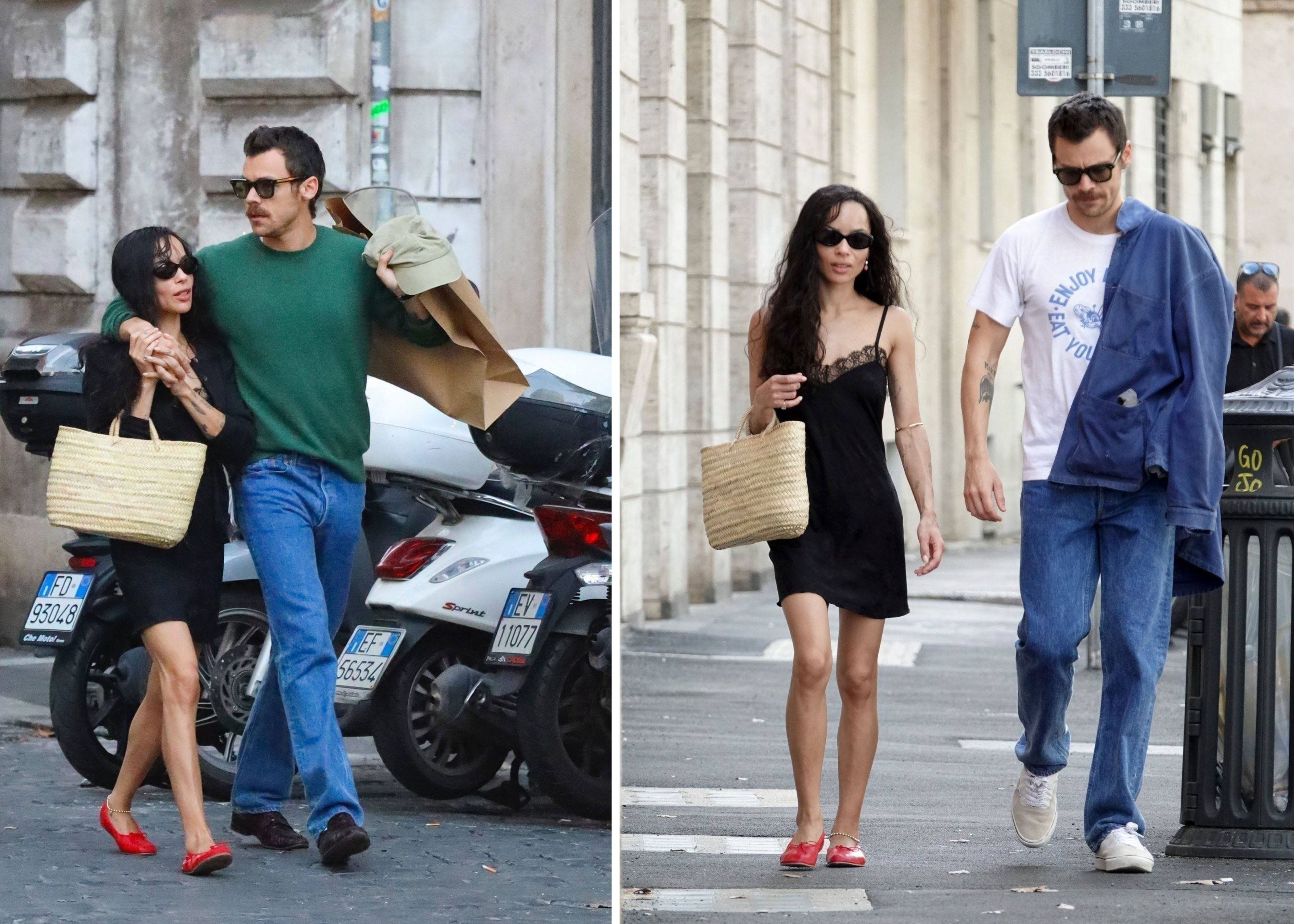
Stretching the Spotlight: Content Drip Strategy
Layered atop this direction is a sophisticated content management tactic. As keen observers have noted, photos shot on the same day—one set in daylight, another in the evening with a subtle change in Harry’s look—are released on separate days.
The PR team’s goal is clear: keep the story alive in the media for a sustained period. Dumping all photos from a single day would spark a 24-hour frenzy followed by silence, an inefficient burn. Instead, they maximize the yield of each photo shoot.
In one day, they stage two scenes: one daytime, one evening.
A quick swap of Harry’s pullover, asier and faster than changing Zoe’s entire outfit, creates two seemingly distinct image sets.
Rather than releasing both immediately, they freeze the evening shots, releasing them a day or two later, pitching them to the media as if they were captured on a different day.
This move delivers three major advantages:
Sustaining the Buzz: The most obvious win. They generate two news cycles from a single event, maintaining a steady media drumbeat that makes the couple appear perpetually in the spotlight, day after day.
Crafting a False Timeline: This tactic fosters the illusion of a relationship unfolding over time. To the casual public, it’s not one day in Rome but multiple consecutive days, lending the story a serious weight and deeper narrative arc. A single day morphs into a romantic weekend.
Logistical Efficiency: It’s far simpler and cheaper to orchestrate one intense shooting day than to coordinate paparazzi, security, and the two actors across multiple days.
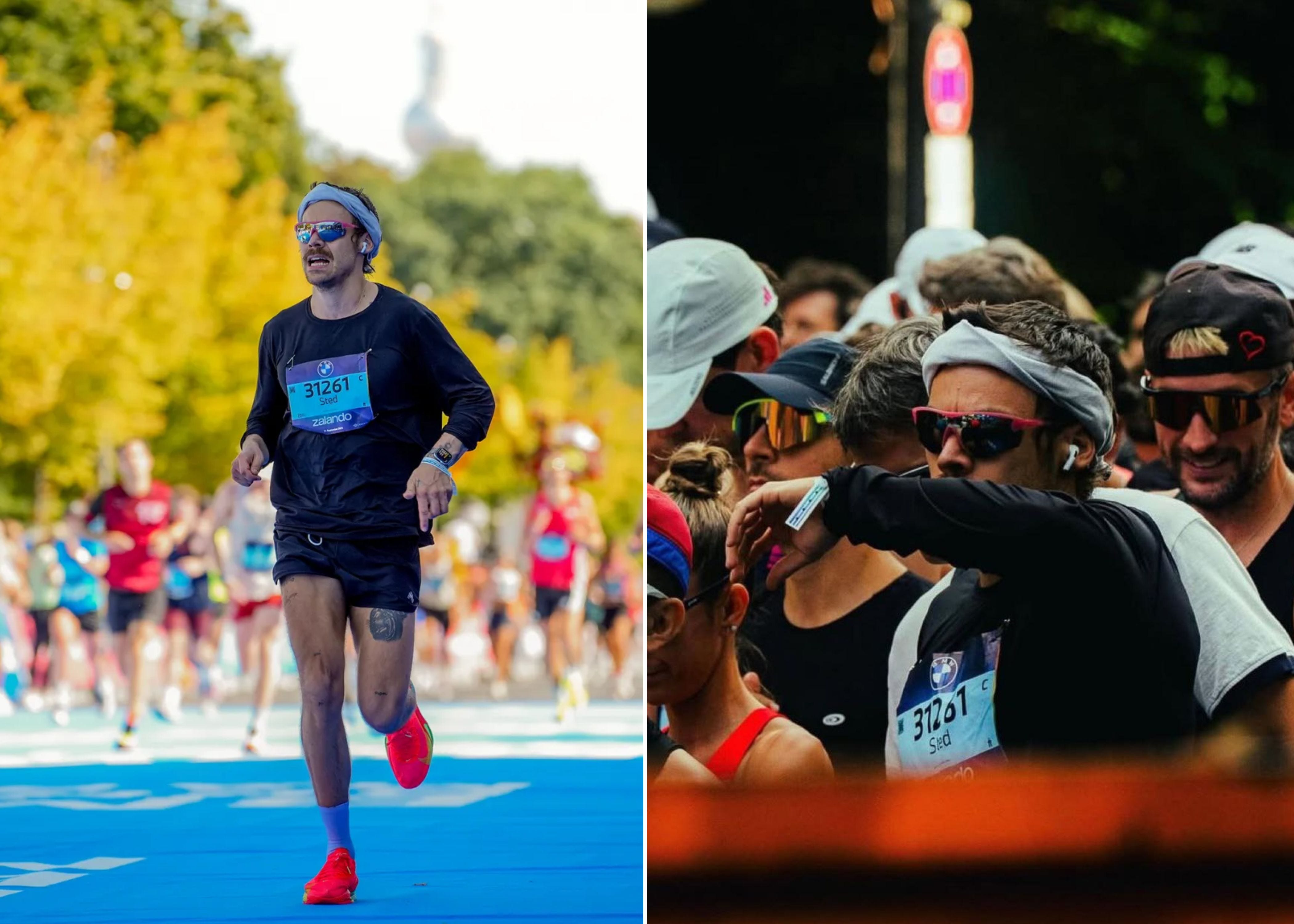
The Marathon Misfire: Zoe’s Absence and the Retcon
At the Berlin Marathon on September 21, Harry Styles, racing under the gloriously misspelled pseudonym Sted Sarandos, clocked an impressive 2 hours and 59 minutes, shaving time off his March performance at the Tokyo Marathon.
A sub-three-hour finish doesn’t just wow fans; it’s an objective feat that earns respect from a wholly new audience: sports enthusiasts, athletes, and those who value discipline and sacrifice.
In a single morning, Styles broadened his demographic in a way his music alone couldn’t.
Major outlets (New York Times, The Guardian, Rolling Stones) covered the marathon, focusing almost entirely on Harry: his athletic achievement, his stellar time, his personal commitment. The Zoe Kravitz relationship? At best, a footnote in the Rolling Stones, absent elsewhere.
The PR machine could’ve woven Zoe Kravitz into the marathon narrative but chose otherwise, sidelining her from an event solely about Harry Styles to avoid tainting it with tabloid romance chatter that would’ve inevitably taken a backseat—as Rolling Stone did.
Yet, despite Zoe’s complete absence before, during, and after the marathon, what does the press do? It spins a narrative to patch this glaring script gap, casting Zoe as a cheerleader at the event, even though she was seen by virtually no one.
This move, in industry lingo, is a retcon (retroactive continuity): a low-cost, low-credibility attempt to retroactively insert a character into a scene they missed, hoping to prop up the story for those still buying it.
All Roads Lead to Rome, but Dead Ends Lie in Paris
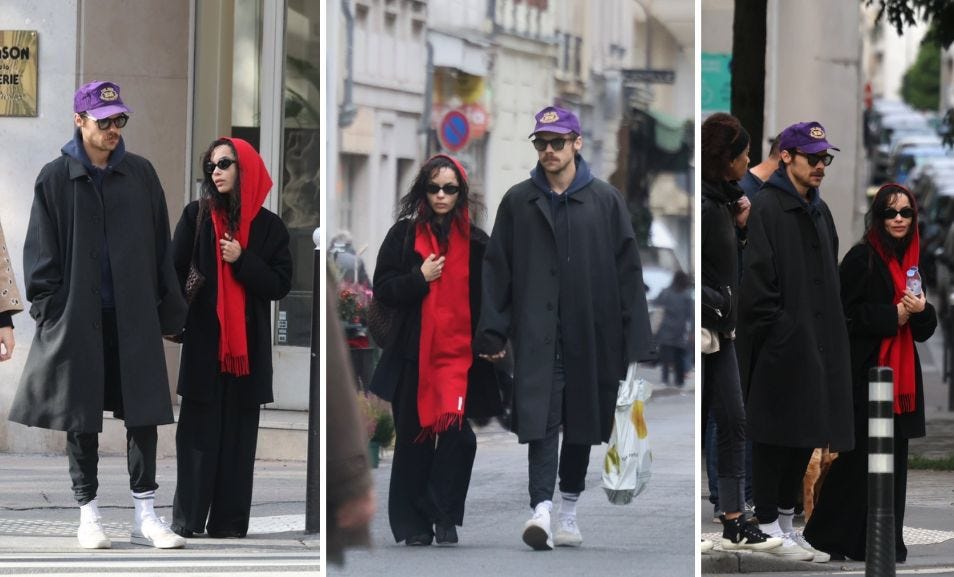
After a brief absence, the couple magically reappears in Paris for a dinner and a stroll through the city’s busiest streets.
This “situationship longer than a world tour” has always resembled a promotional circuit hitting major Western capitals (New York, Rome, Berlin, Paris) more than a plausible romance between two people who, if not in love, might at least feign attraction.
But beyond the actors’ lackluster chemistry, barely hitting the minimum effort, the Paris strolls see the script collapse entirely, failing to prop up a love story the press has lost interest in.
The Paris paps, uploaded by Backgrid as premium content on September 27, circulated only in low-res on social media. Major gossip outlets—TMZ, The Sun, The Mirror, Page Six, Daily Mail—didn’t buy them. Why?
The answer is simple and brutal: the press, before making any move, does the math.
An editor at TMZ or Daily Mail, before shelling out $5,000–$10,000 for a premium photo, asks one question: “Will this asset deliver a return on investment (ROI) in clicks and engagement?”
Here, the answer was a resounding no, for these reasons:
The Film’s Flop: The primary driver. The stunt’s raison d’être was to promote Caught Stealing. Once the film tanked at the box office, the story lost its main hook. It became gossip for gossip’s sake, untethered from a product to push.
Overexposure Fatigue: The relentless, staged photos, always the same walks, same dinners, no narrative evolution, likely bored the audience.
The Berlin Marathon: The marathon story proved infinitely more compelling, positive, and authentic, cannibalizing interest in the couple's narrative. The average reader now cares more about Harry’s race time than his Paris dinner with anyone.
The tipping point likely came post-Berlin, when editors crunched the numbers and realized the public’s interest had waned, and the engagement potential of new photos was too low to justify their cost. The product was deemed expired.
If the stunt had worked, it would’ve sparked such narrative hunger that every new couple photo would’ve been a hot, instantly sellable asset.
The press’s refusal to buy the new photos, when their business model thrives on feeding that hunger, signals definitively that no audience remains to consume this story. It’s over, deemed unprofitable.
This decision ripples to Backgrid, the couple’s primary photo distributor.
If major clients won’t buy, Backgrid will swiftly stop investing time and resources in tailing the couple, redirecting flashes to another celebrity with better ROI.
This brings us to the base of the pyramid: Columbia’s marketing/PR team.
They’re holding a double commercial failure: a film that didn’t hit its break-even point and a stunt that not only failed to drive ticket sales but is now shunned by the press.

A Low-Budget Reboot: New York, New Narrative
After nearly 15 days of deafening silence—a blackout that, not coincidentally, began with Caught Stealing’s commercial death in the U.S. market—the “couple” resurfaced in New York. First Harry, then Zoe, and finally the “pair” together.
This reappearance marks the end of Zoe’s media quarantine and the launch of a low-budget reboot with a new director, new goals, and a shorter runtime, aimed at a different audience.
The earlier operation was a high-cost, premium bombardment for U.S. and European markets. This one? A lean, low-effort pivot with dual objectives tied to a single day: October 18, 2025.
On that date, Caught Stealing premieres in China, Darren Aronofsky’s first foray into the world’s second-largest film market. The goal is to claw back some revenue after the U.S. flop. Simultaneously, Zoe attends the 5th Academy Museum Gala in Los Angeles, kicking off the U.S. awards season.
A New Script, Same Stage
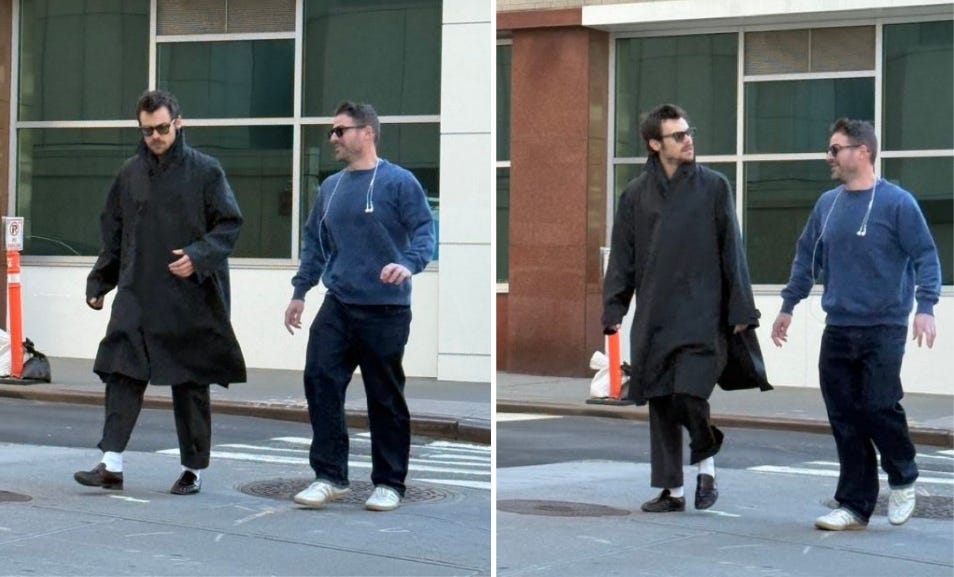
This reboot’s direction is humbler but savvier. To justify Harry’s New York presence and lend the reunion a shred of credibility, a new narrative emerged: Harry’s in town for “business” meeting with his manager Tommy Bruce and maybe hitting the recording studio.
Both excuses are flimsy and crumble under scrutiny. A call to Bruce would’ve sufficed (classic meeting-that-could’ve-been-an-email vibe), and Harry’s solo trip—without his usual crew, notably his inseparable collaborator Kid Harpoon—raises eyebrows.
Why the Alibi?
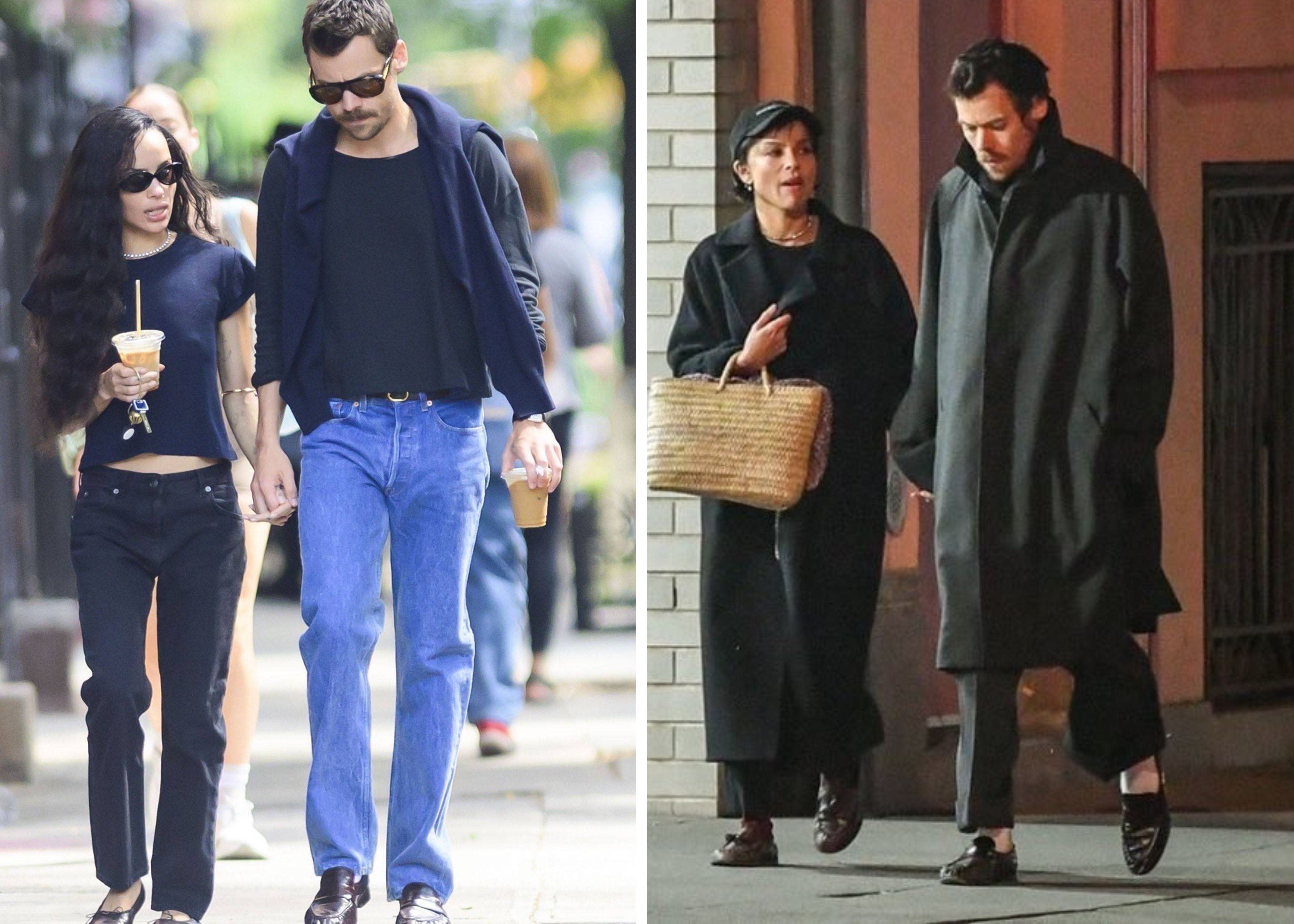
Why concoct a backstory for Harry’s New York jaunt when September’s sightings didn’t need one? Simple: back then, the new romance narrative was fresh enough to explain his presence.
After 15 days of radio silence, they couldn’t just reappear without a plausible alibi to reignite the spotlight.
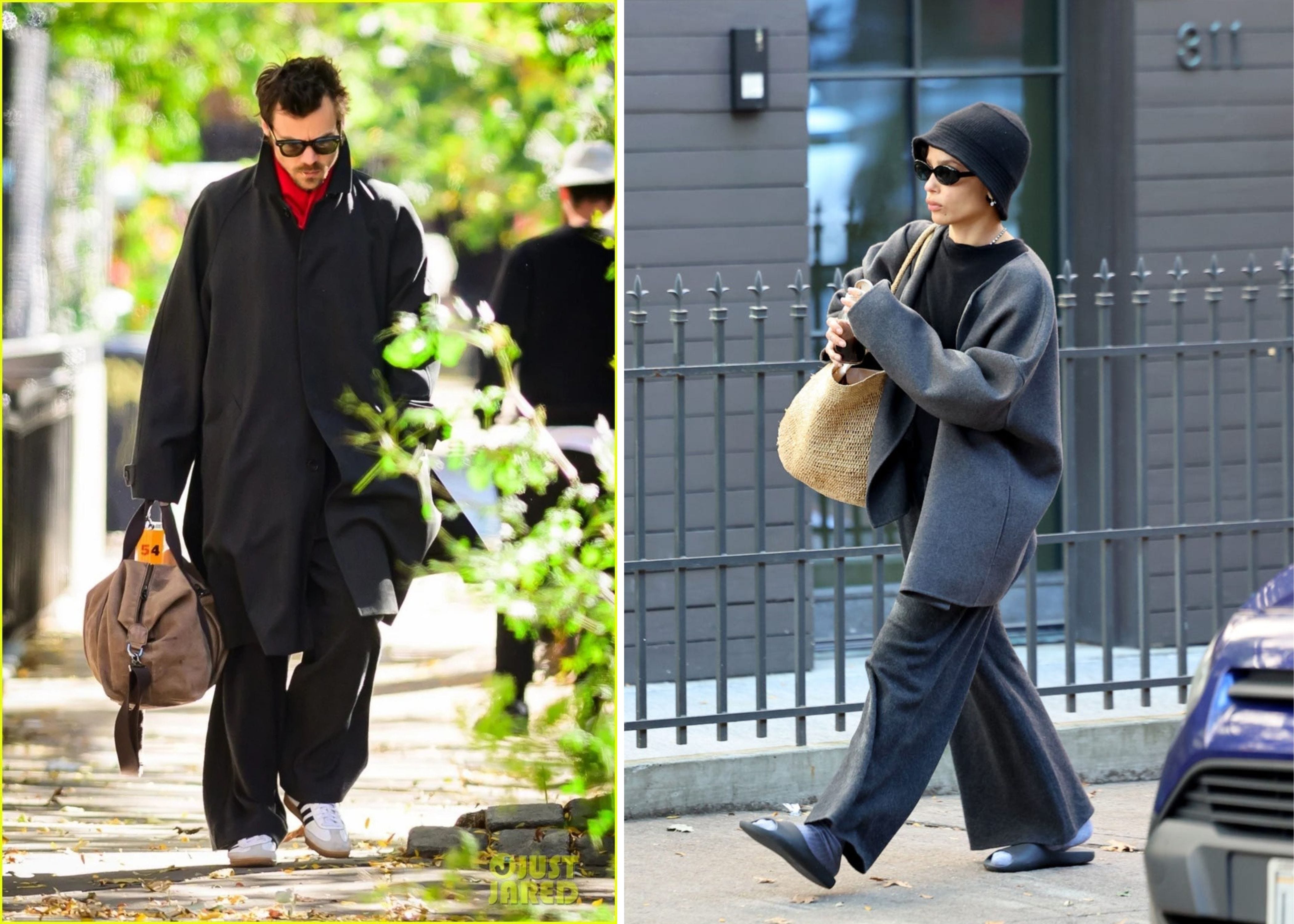
The most surreal clue to this operation’s shift? The wardrobe. Despite New York’s unseasonably mild 21°C (70°F) weather, both Harry and Zoe (even in solo shots for Harper’s Bazaar) were photographed in heavy outfits: long coats, cashmere sweaters, scarves, and fully covered looks.
This odd, climate-defying style is a deliberate nod to international compliance. China’s media market, regulated by bodies like the NRTA (National Radio and Television Administration), operates under strict cultural and political norms discouraging “overly revealing” clothing.
While no explicit laws ban skin exposure, PR teams targeting China avoid testing censorship boundaries. A blocked or altered image is a wasted investment. Thus, the conservative, censor-proof wardrobe ensures global publishability, with China, the reboot’s primary target, as the priority.
Touch-and-Go Production
October 16 was a single-day production blitz, planned to generate a week’s worth of “news”. The tactic mirrors the Rome shoot: maximize logistical efficiency with one day of filming, then drip-feed the content to fake a multi-day timeline.
But unlike the stunt’s first phase, the details betray its short-term, commercial nature:
The Gym Bag: Harry’s photographed with minimal luggage—a gym bag, not the suitcase of a guy “moving in” (as Backgrid’s caption claims), but a pro on a 2–3-day mission.
The “Producer” On Set: No friends or bandmates in sight—Harry’s spotted with Tommy Bruce, co-founder of Full Stop Management, the agency handling his PR.
Pre-Fab Narrative: Backgrid’s photos, captioned “Harry leaving Zoe’s place”, lack evidence to support the claim. It’s a manufactured context sold to media to prop up the fiction.
The Great Uncoupling
The October phase wasn’t about reviving the couple narrative but dismantling it cleanly, freeing both brands for future endeavors.
The October 16 shoot prepped this dissolution with two distinct shots serving complementary purposes:
The Solo Shot (October 17, Harper’s Bazaar): Zoe’s “street style” photo, published the day before the Academy Gala, signals a narrative split. After the “couple” sighting, she’s repositioned as a standalone style icon, non-verbally declaring: “The romance is over. Let’s talk fashion“
The Red Carpet Triumph (October 18, Academy Museum Gala): Zoe, in YSL as brand ambassador, shines independently on Hollywood’s biggest stage, cementing her return to her professional universe, untethered from Harry.
End-of-Season Clearance
This reboot also reveals a shift in agency roles. Two firms are involved: Backgrid for solo shots, The Image Direct for “couple” photos. The operation was downgraded from “premium“ to “economy“ after Backgrid’s Paris couple shots went unsold.
The “Kravitz-Styles” asset lost market value. Faced with this, every player pivoted to the logic of profit:
Backgrid’s Play: As a premium agency, Backgrid focuses on high-yield assets. With the “couple” dead, they chase profitable solo shots of “Zoe, style icon” and “Harry, style icon” for outlets like Vogue and Harper’s Bazaar.
The Image Direct’s Role: To manage the narrative’s fade-out, the PR team needed cheap “proof of life” couple shots. Unwilling to pay Backgrid’s premium rates for a dud asset, they turned to The Image Direct, a lower-tier agency, to document the fiction with minimal cost.
The Press Picks Apart the Carcass
The media’s fragmented response signals waning interest:
TMZ sticks to its gossip roots, reporting the couple.
Just Jared covers Harry and Zoe separately, avoiding the pair narrative.
Vogue and Harper’s Bazaar focus on individual style, recognizing that solo brands have more traction than the declining “couple” asset.
The press isn’t blindly following the script anymore; they’re dismantling the “couple” and scavenging its valuable parts: the individual stars.
Backtracking the Showmance: The Origin Story
Before diving into what went wrong, let’s rewind and unravel the chain of events that birthed this showmance. To understand the missteps, we first need to pinpoint how and when it all began, because long-term memory seems to be an optional feature these days.
Until August 24, Harry was hanging out across Europe, crashing this or that friend’s wedding, solo. Up to that point, even he likely had no clue about Zoe Kravitz or her film Caught Stealing.
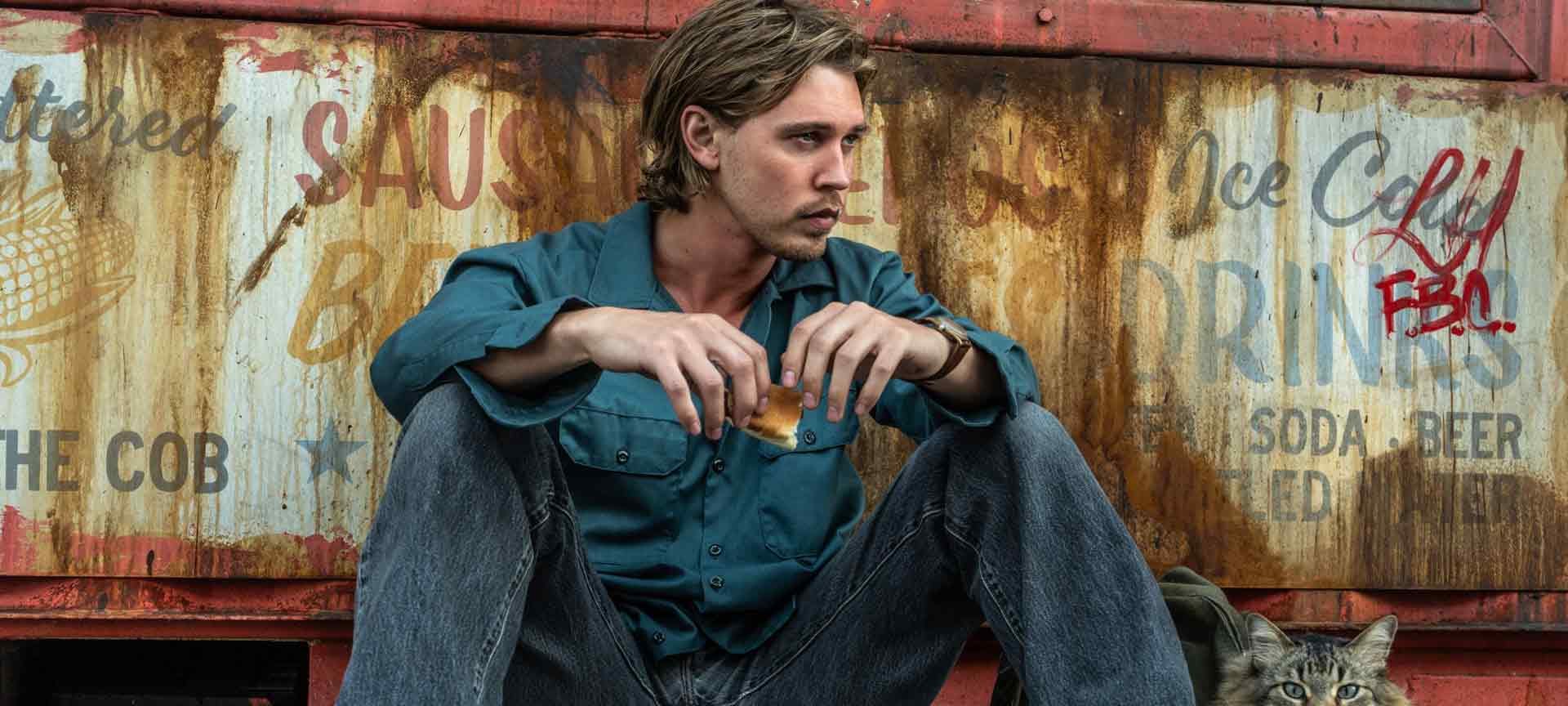
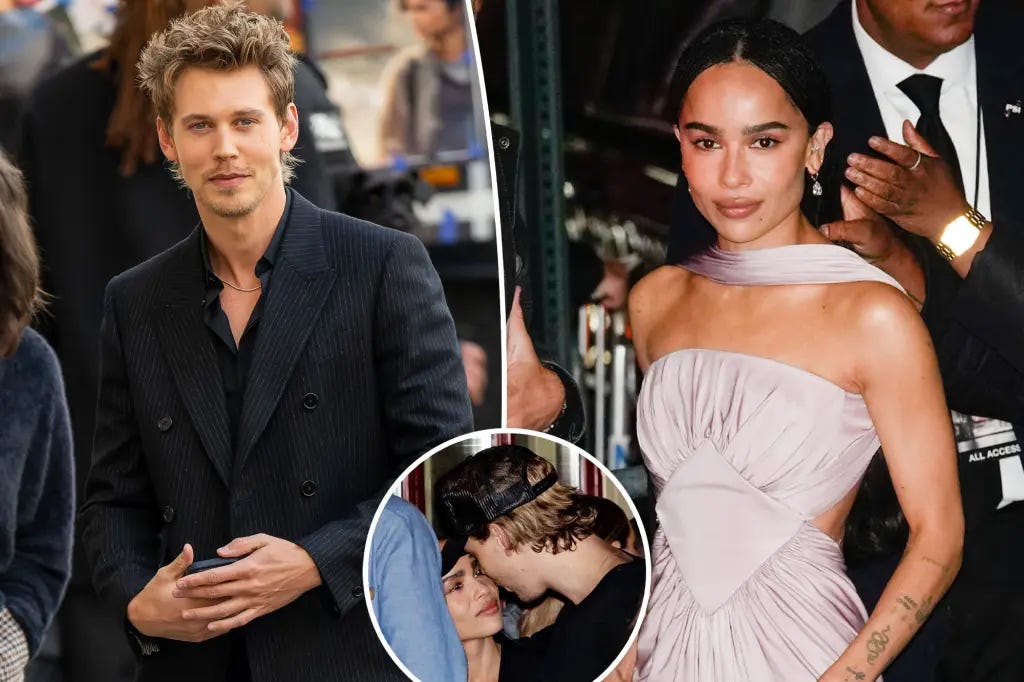
On August 19, the film premiered in London, followed by Paris on August 21. Here, courtesy of Backgrid, Zoe Kravitz and Austin Butler, the film’s stars, were spotted spending an evening at a bar, with Butler embracing Kravitz at one point. The press didn’t miss a beat, hyping their chemistry and the usual gossip tropes. The article dropped on August 23.
Judging by the data and timing, it’s evident that the original strategy centered on a Zoe Kravitz-Austin Butler couple narrative, only to be swapped out at the last minute.
The plan was likely to craft a cinematic love story mirroring their on-screen bond to drum up interest in the film. That Zoe was seen with Harry Styles just two days later suggests the studio made a swift, drastic pivot. The question is: why?
Based on industry dynamics and gathered clues, the most plausible reconstruction of the critical four days from August 21 to 24 unfolds as follows:
The film, Caught Stealing, had just wrapped its European premieres in London and Paris. The media buzz was tepid, reviews were lukewarm, and projections for the U.S. debut (set for August 29) were likely dire. Time was running out. Columbia Pictures’ marketing team (the distributor) and Zoe Kravitz’s crew were in full red alert mode: they needed a media defibrillator, something massive to make the film a talking point, and fast.
The Negotiation (August 21–24): The Call to Jeffrey Azoff
This is the black box period where the real action went down.
It’s almost certain that frantic calls were made between the film’s team (Columbia/Kravitz) and Harry Styles’s team (Full Stop Management, led by Jeffrey Azoff). The pitch was blunt: “Our film’s about to crash. We need an unprecedented visibility boost. We need Harry Styles’s cultural capital to generate a tidal wave of buzz that might, just might, save the box office”.
Azoff’s team, managing one of showbiz’s most potent assets, doesn’t work for free. Terms were negotiated: “Fine, we’ll lend you the ‘Harry Styles’ brand, but this has to serve our goals too”. Counteroffers hit the table: promotional push for Pleasing’s U.S. pop-ups, maintaining Harry’s visibility during his hiatus, and so on. It’s a full-fledged commercial deal.
Laying the Groundwork: People’s Role
While the teams haggled, they needed to prep the narrative terrain. The kiss story from the London premiere, published by People, came with no photos—a glaring sign of its artificiality.
That article wasn’t a rumor scoop but a narrative seeding. It was a press release dressed as gossip, fed to a friendly outlet to plant the idea of a connection in the public’s mind.
It served as a fictional prequel. When the first real photos surfaced in Rome, the audience wouldn’t think, “Where did these two come from?” but “Oh, this is the next chapter of the London story!”
It’s a preemptive move to lend coherence to a tale conjured from nothing.
The Performance Begins (August 25): Zoe “Drops” into Rome
Zoe didn’t just drop into Rome out of nowhere; she landed there because Rome was chosen as the first agreed-upon set during those prior days’ negotiations. It’s the perfect stage: romantic, relatively controllable, and symbolically meaningful.
The amateur photos from August 25 weren’t a fan’s lucky snap but Scene 1, Take 1 of a production meticulously planned in 96 hours of frenzied marketing talks.
What we saw from August 25 onward was simply the public rollout of a cross-promotional deal, born from the film team’s commercial desperation and the strategic opportunism of Styles’s camp.

End Credits: One-Two Punch Narrative
Now, let’s examine how the exit ramp from this promotional highway was constructed. On September 19, two articles surfaced simultaneously: one on Yahoo and another in Vanity Fair. Let’s break down these two mechanisms.
The Yahoo! Article
This piece, appearing on a tabloid or its aggregator, speaks directly to the mass gossip audience. It aims to create preemptive vulnerability.
Rather than focusing on the relationship itself, the article highlights the fear of its collapse, introducing an anonymous source (“friends”) expressing concern.
It casts Harry Styles as the potential victim, the smitten lover at risk of heartbreak. This shields his brand ahead of the breakup.
Implicitly, it paints Zoe Kravitz as the unstable force, the femme fatale with a history of complex relationships who might break his heart.
After weeks of speculation about the nature of the Kravitz-Styles romance, this marks the first time the news cycle floats the idea that it could end.
This article does the dirty work, priming the emotional terrain, sowing doubt, and laying the groundwork for public sympathy toward Harry Styles, the wounded lover.
The Vanity Fair Article
Here, we have a prestigious outlet addressing a more sophisticated audience, lending an air of intellectual legitimacy.
The article sidesteps the current relationship, focusing instead on the pattern of Zoe Kravitz’s past romances. It normalizes the idea that she has intense but fleeting relationships with celebrities, turning her love life into a recognizable canon.
This piece provides the perfect motive: post-breakup, the Vanity Fair article will be cited as evidence that it’s just her nature.
The split won’t be framed as a PR stunt’s failure but as the natural outcome of her being an independent woman navigating Hollywood. This protects her brand.
It offers a noble justification, not the film’s out, we don’t need you anymore, but two complex souls tried, but their lives were incompatible.
These articles are designed to prepare the ground for the relationship’s end. Their purpose is to build the narrative foundation for its inevitable, imminent conclusion, wrapping the story neatly without collateral damage to either star’s brand.
End Credits Reprise
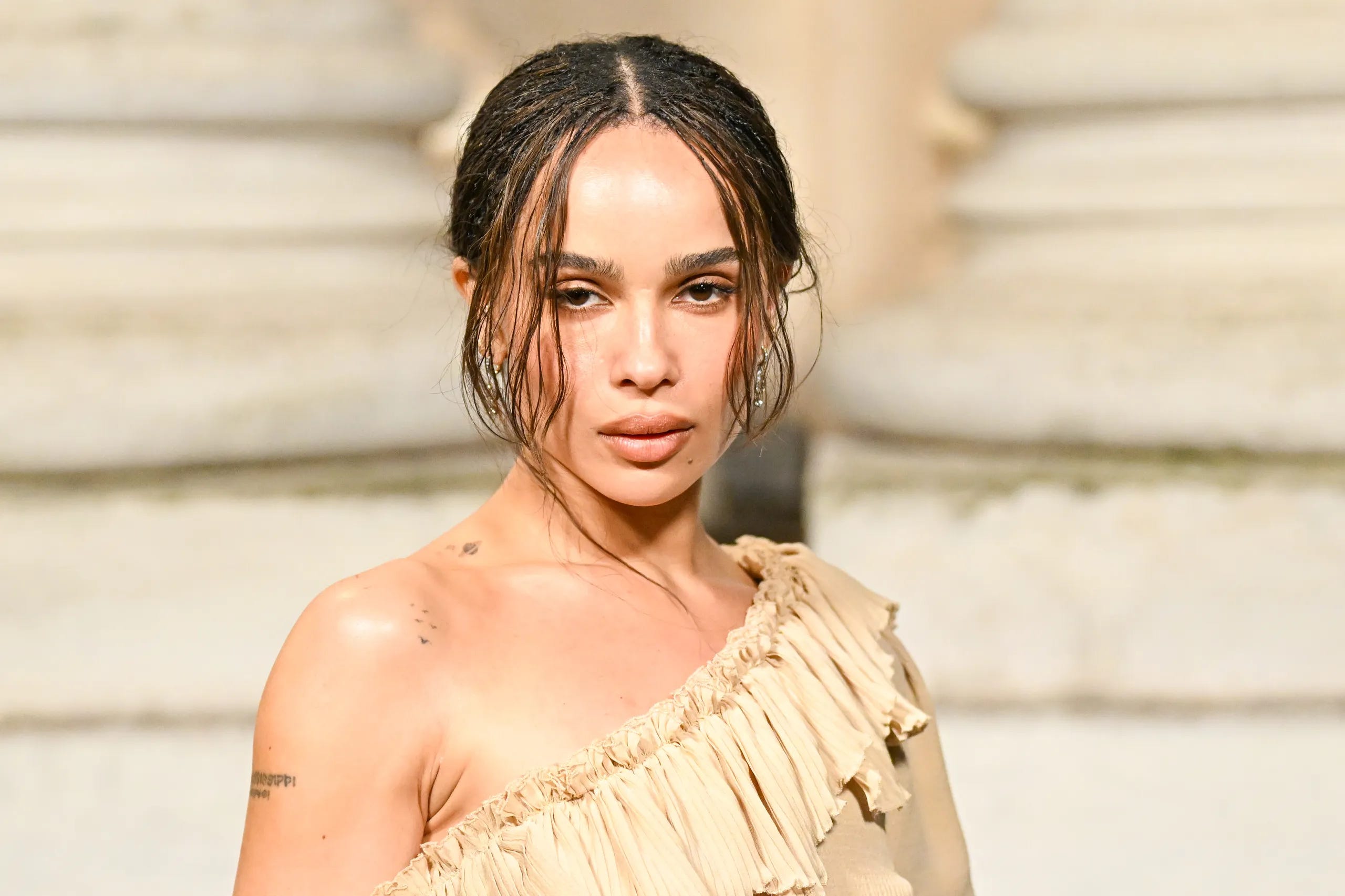
The Berlin Marathon briefly paused the couple’s narrative, but it roared back into gear after Zoe Kravitz’s appearance at the YSL fashion show on September 29.
Immediately, two articles dropped: one from the Daily Mail and another from Radar Online. Let’s dissect them.
The Daily Mail Article: Narrative Patching
The Daily Mail piece is a masterclass in narrative manipulation. It brazenly ignores the Paris paps (which it didn’t buy) and retroactively inserts Zoe into the Berlin Marathon, where she was conspicuously absent.
This is the narrative patching we’ve discussed, but on steroids—a deliberate rewrite of recent history to smooth inconsistencies and pitch a coherent timeline to the masses.
But why didn’t the Daily Mail buy the exclusive Paris photos and now publish a solo Zoe piece?
Simple: the YSL show’s news value, economically and narratively, trumps the couple shots. As noted, the Paris photos were too costly for their dwindling engagement potential, marking the couple as a commercially expired product.
The Saint Laurent show, a standalone media event packed with celebrities posing bored in the front row, carries intrinsic weight. Zoe’s solo photos from the event, supplied by YSL’s press office, Paris Fashion Week, or generic agencies, are cheaper and offer a stronger narrative hook at this stage: “Lone Star at Glam Event”.
Radar Online’s Final Blow: Accelerating the Fade-Out
The Radar Online article, far more aggressive and detailed than prior pieces, resurrects the “worried friends” trope with tearjerker embellishments, triggered by the YSL event.
The show provided the perfect pretext to reignite the breakup narrative. Zoe’s solo, stunning appearance became the cue for sources to chime in: “See? She’s in her world, he’s in his. Harry’s friends are worried”.
The sequence is clear and ruthless:
Ignore the Failed Climax: The pricey Paris photos are sidelined as commercially unsellable.
Exploit a Free Event: Zoe’s YSL appearance, already guaranteed media coverage, becomes the new narrative pivot.
Reactivate the Breakup Script: Her solo image fuels the final, aggressive wave of preparatory articles, supplying the emotional rationale for the split.
By September 30, Radar Online’s piece is echoed by outlets like Yahoo Entertainment and Geo TV, a classic echo chamber tactic to make the story seem real and corroborated, when it’s merely the reverberation of a single, controlled leak.
The goal is to hammer the public with one clear narrative before the official announcement: Harry as the victim, portrayed as hopelessly in love, while Zoe is kinky, dominant, and has worried friends. They’re painting a golden-hearted good guy about to be hurt by a complex, dangerous woman.
The PR team masterfully used a public event (the fashion show) to rewrite the story, close the stunt without paying for the latest photos, and position Harry, once again, as the victim of an overly complicated romance. All with low-cost media fodder.
The Devil’s in the Details: What Went Wrong?
Beyond the timeline and tactics, why did this stunt feel so clumsy, predictable, and ultimately ineffective?
The operation’s failure boils down to four fatal missteps, each undermining a core facet of the production: performance, direction, and script.
Performance Flub: Zero Chemistry
The media peddled a tale of fiery passion, a friends-with-benefits whirlwind. Yet the performance never backed the facade.
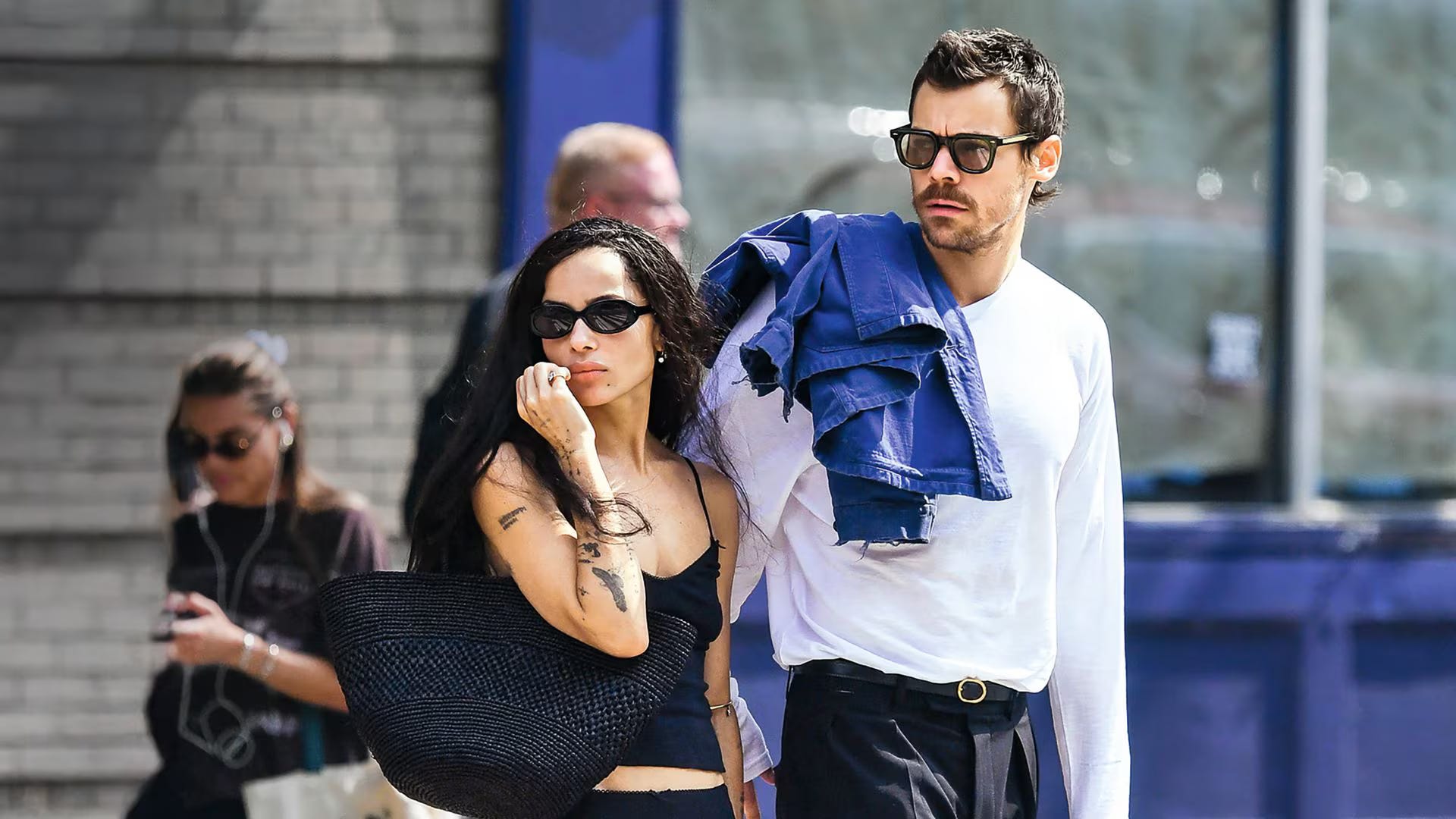
Across nearly one month of paparazzi shots, not one image conveyed a genuine spark, capped by the glaring absence of a single kiss.
This gap stands in stark contrast to Harry’s spontaneous, 30-second smooch with a stranger at Glastonbury. A moment radiating more intimacy than weeks of choreographed strolls in New York and Rome. It’s a textbook “show, don’t tell” failure: the story was narrated but never convincingly acted.
Directorial Fumble: Losing Control of the Set
The production team made a critical error: they banked on an old-media strategy, curated sets with friendly paparazzi, in an age of ubiquitous smartphones.
They underestimated the power of fans, each a potential disruptor capable of exposing the trick with a single clip.
The amateur video capturing a paparazzo in action shattered the illusion, revealing the backstage mechanics and turning a supposed slice of life into a clunky cinematic take. In a world where every angle is up for grabs, a direction reliant on controlling a single perspective is doomed to collapse.
The Symmetry of the Void: A Narrative Without Events
The entire “relationship” is a narrative construct built on pillars of events that never happened.
The absence of tangible evidence at both ends of the story turns this operation from a “likely” staged act into a proven fabrication.
The supposed foundational moment (that London kiss) and the narrative climax (their alleged cohabitation) are the two key beats, completely lacking any visual proof.
This symmetry of the void is the hallmark of an operation rooted not in documenting events but in crafting a script from thin air.
Scripting Mess: A Dated Story and Miscast Leads
The deepest flaw lies in the script itself: it didn’t fit its stars. The narrative mimicked a young adult novel, featuring a summer fling, a long-distance struggle, and a romantic escape, but was presented to two seasoned adults in their thirties.
Picture Dawson Leery at 15, wrestling with existential angst like a teenage Kierkegaard. Similarly, the mismatch between cast and story bred an artificiality the audience instinctively clocked. The tale was fundamentally miswritten for the players tasked with bringing it to life.
A lackluster performance, a direction team outmaneuvered by modern tech, and a script that clashed with its leads: a flop across the board.
Why Does Harry Keep Playing the Game?
This is the million-dollar question. If he’s such a complex artist, perpetually wrestling with himself, why does he keep signing up for these blatantly staged performances?
The answer isn’t singular but lies at the crossroads of immediate commercial necessity and a deeper professional ethic that constantly grapples with the industry’s demands.
The most tangible explanation emerges in the precise alignment between the stunt and the launch of pop-up events for his brand, Pleasing, across U.S. cities, scheduled from mid-September to mid-October.
The operation becomes a strategically flawless do ut des: Harry’s visibility props up an external project (Kravitz’s film) while creating momentum for his own commercial venture.
But the deeper reason, tied to his ethic, is perhaps even more pivotal.
In mid-August, amid leaks about his forthcoming fourth album, fueled by sloppy journalists and amplified by the fandom, a statement clarified both the label’s and Styles’ stance:
The label does not plan to release a new Harry Styles album until 2027. They are interested in a Glastonbury headline along with the album, and since there will be no festival in 2026, Harry also likes this idea.
Despite speculation, the album is not finished yet. Due to cases of quick music releases like Sabrina Carpenter and Taylor Swift, Columbia bosses cannot agree on whether a five-year gap between albums is normal. Some employees suggest a series of singles to satisfy fans.
Insiders also told Daily Mail that Styles refuses to deliver albums “on demand” and will take as much time to complete the work as he deems necessary. He stated this against the backdrop of other bosses being concerned that the British music market has declined this year, and a Styles release would give the needed boost.
What’s the subtext here?
Put, we’re witnessing a clash between two opposing philosophies shaping music today.
On one side is the Content Machine model, exemplified by artists such as Taylor Swift and Sabrina Carpenter. In the Spotify and TikTok era, their strategy is to dominate with a steady stream of releases, keeping attention high and maximizing streaming revenue. It’s the model labels love: predictable, steady, and profitable.
On the other hand, there’s Harry Styles’s Cultural Event model. This approach hinges on strategic scarcity, with long pauses that build anticipation and transform an album into an epochal moment.
The statement is clear: Styles refuses to deliver albums on demand to prop up the market, even if it sparks internal debate at his label, which eyes the success of the opposing model with some anxiety.
There’s also a hybrid model, like that of Cardi B, which bridges long waits with singles and features. A solution that Columbia seems to have tentatively suggested to Styles.
However, the real strategic move is tying the release to Glastonbury. Not Coachella, the global pop temple where he launched Harry’s House, but Glastonbury, the hallowed ground of British rock consecration.
Styles, who felt not ready for that stage in 2019, now dreams of it.
This is a statement of intent: He wants to make music history, not just top the charts.
Yet, faced with pressures from the industry and his own fans, both demanding constant visibility, the stunt becomes a strategic buffer, a decoy to feed the media circus.
It’s a calculated compromise: Harry sacrifices a sliver of his public image to the tabloid frenzy to appease the hungry masses, buying himself the freedom and time to preserve the integrity of his art. The one thing he refuses to negotiate.
This compromise lets him navigate a complex system: it honors contractual visibility obligations, erects an iron curtain around his true private life, and follows a protocol he’s known by rote since his teens.
It’s precisely on this constant tension, this fine line between the artist’s integrity and the commercial machine’s demands, between the person craving time to create and the persona forced to feed the public, that Harry Styles’s entire artistic and narrative world is built.
And What’s in it for Zoe Kravitz?
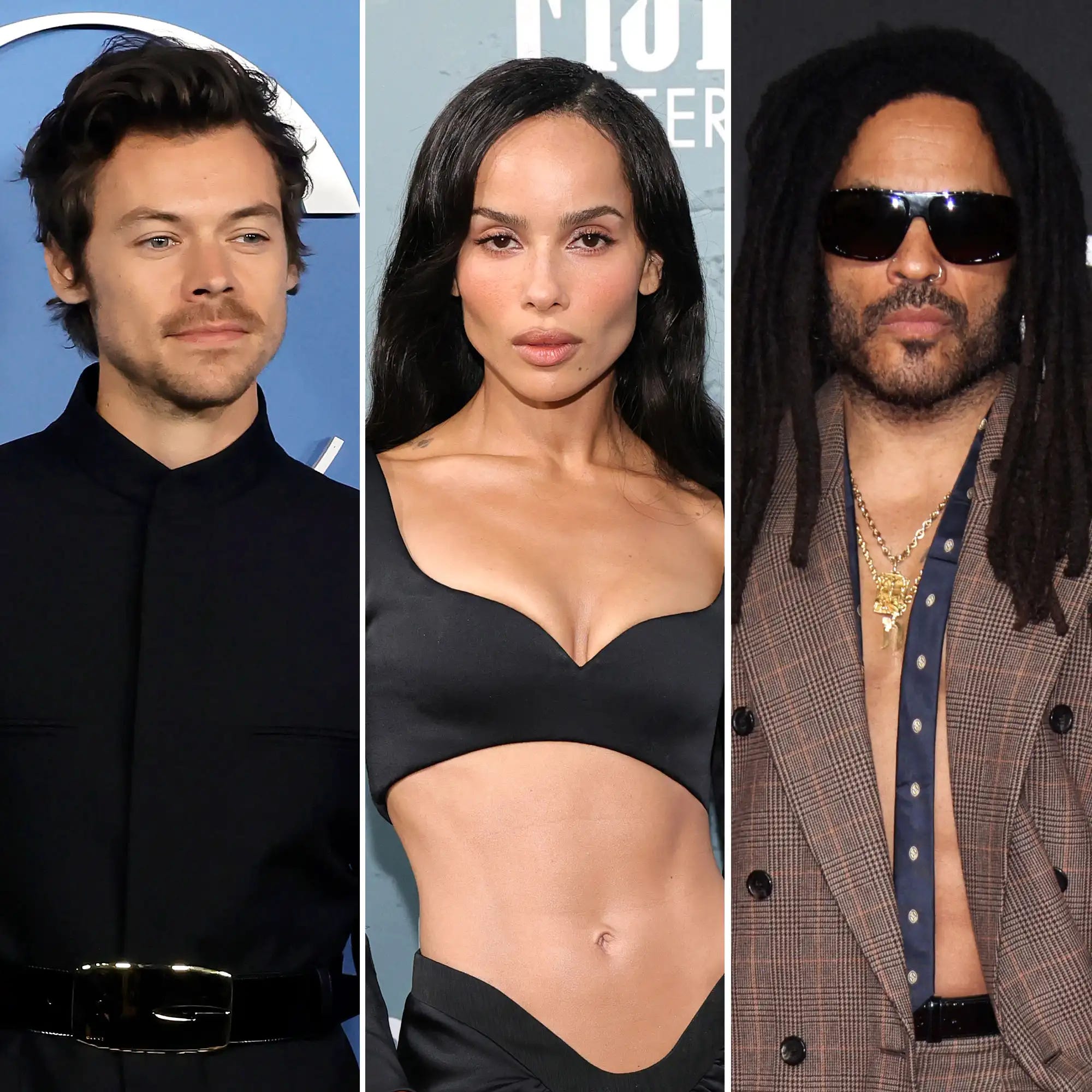
Beyond boosting Caught Stealing, where she’s the only significant female character and thus the sole candidate for this romantic adventure with Harry Styles, the stunt serves multiple functions in Zoe Kravitz’s career.
At 36, with an acting career that’s never quite hit A-list status despite her famous name, Zoe’s pivot to directing with Blink Twice is a strategic move to reposition herself as a creator, an auteur figure. But carving out space among new auteurs still demands attention.
Trading the shadow of an imposing father for that of an even more towering partner paints a portrait of a career still reliant on tapping a man’s cultural capital to reach the next level.
Styles is the vehicle she’s using to fast-track this repositioning. Her real gain isn’t the failed opening weekend of the film but a longer-term payoff.
For the next 12–18 months, every article about her, especially tied to upcoming projects, will inevitably link her to Harry Styles. The label of “Harry Styles’s ex-girlfriend” guarantees media attention she’d never secure on her own.
This stunt, in essence, is a long-term strategic investment in her career.
It’s a tragically classic Hollywood trade: she lends her body and image for a weeks-long performance, and in return, she buys an extended tail of media relevance tied to one of the world’s most potent personal brands.
She’s leveraging the stunt to ensure that when her next projects drop, she’ll command the attention and clout that have eluded her thus far.
The Fanbase Weighs In
For this round, I dove back into Harry’s fanbase, focusing not on the loudest voices but the close readers, fans who deconstruct this stunt with surgical precision, even if they don’t always grasp its commercial roots. Here are their sharpest takes:
Tactical Breakdown: “There’s a Deadline Looming”
Fans noticed the relentless photo ops, with one quip hitting the mark: “I’ve seen more of Harry and Zoe this week than my own parents”.
It’s not just snark but a keen observation of an overzealous marketing push, not a budding romance.
The rushed vibe and deadline talk reflect the campaign’s urgency, likely tied to Caught Stealing’s box-office struggles.
Psychological Insight: The Two Harrys and the “Empty Cup”
Fans and I both see a split: the free, fluid artist Harry versus the performative, womanizing stunt Harry.
This duality, central to his Fine Line album, fuels his art but clashes with his public image. Fans sense the cognitive dissonance, a man trapped between authenticity and artifice.
Ethical and Strategic Critique: “Lazy, Embarrassing, and Outdated”
Mature fans, mostly women, 18-24, educated, propping up both the music and book industry, call this stunt stale, a relic of 2010 PR tactics in a post-2020 world.
They point to openly queer artists like Chappell Roan, Renee Rapp, and Conan Gray, proving that ambiguity in art doesn’t need performative heterosexuality to sell. Transparency, they argue, wins more respect today.
The Italian Fans’ Fury: Breaking Rome’s Pact
The harshest critique comes from Italian fans, accusing Harry of disrespecting Rome’s hospitality.
For two years, he roamed the city unbothered, hitting markets, jogging, even shopping at the pricey Coop supermarket (a running joke: “Only Harry Styles can afford Coop groceries!”). Locals left him alone, honoring his quest for normalcy.
Now, with paparazzi and Paddy in tow, that unspoken pact is shattered. Rome, the city of the Empire, welcomed him as a regular guy. By turning it into a stage, Harry’s gone from relatable to untouchable.
Harry Black Belt
At this point, I believe we’ve covered all the critical angles. We’ve dissected the strategy’s evolution, the wardrobe overhaul, the motives fueling this charade, the production’s missteps, and the audience’s response.
Having achieved this moment of clarity, it’s time to take a further step toward owning the accountability. If this show, despite its slip-ups, succeeded in generating buzz around its two stars, it owes much to its fiercest critic: Harry Styles’s fandom.
As explored in September’s Bold Line, where we traced the roots of this fandom, largely drawn from reality and talent show viewers accustomed to consuming linear, predictable romantic arcs, it’s no surprise that the entertainment industry leans on these same tactics to keep this audience glued to their screens.
These stunts exist because the public consumes them, critiques them, yet fuels them, demanding and craving their idol’s constant presence on social media. When Harry steps back for his own needs, he’s dragged back in, relentlessly pressured to perform.

Countless comments point out how this or that artist dropped new work this year while Harry Styles twiddles his thumbs. As if, as we also unpacked in that piece, there’s a competition among artists, with Billboard’s charts as the scoreboard.
So, this stunt didn’t materialize from the void; it stems from the pressures of an insatiable fandom and an industry that squeezes its artists dry like lemons, ready to move on to the next when one’s juice runs out. Harry Styles is caught squarely in this crossfire.
Kudos to him for not yet grabbing a baseball bat named “Kindness” and smashing everything to bits.
Styles and Kravitz Lunch with Debord
Why dedicate thousands of words and weeks of analysis to decoding a fleeting celebrity fling?
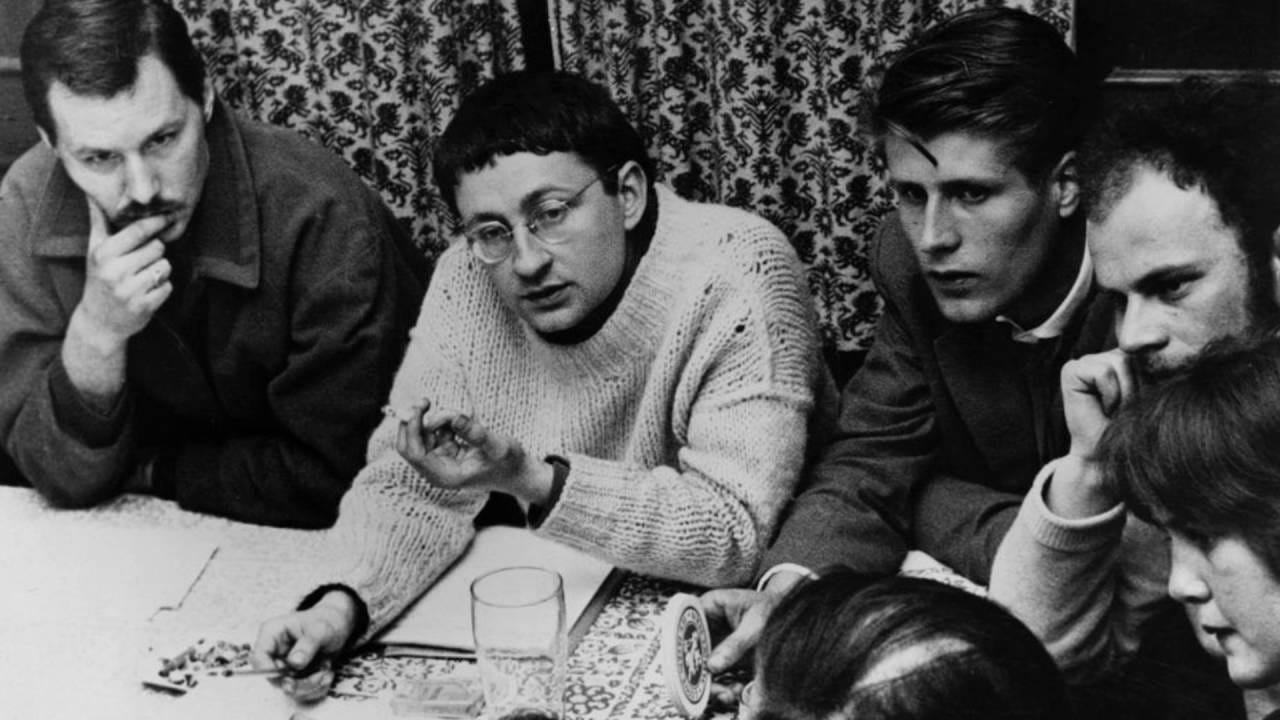
Because the Kravitz-Styles PR stunt is the perfect case study for applying Guy Debord’s theory.
In his seminal 1967 work, The Society of the Spectacle, Debord argued that in advanced capitalist societies, real life has been replaced by its representation. We no longer live experiences but consume spectacles of them.
Per Debord, the spectacle is the array of images and media dominating society, presenting a fake, pacified world that masks the reality of economic and social relations.
It’s a social relationship between individuals, mediated by images.
But what does this sentence mean? And how does this framework illuminate the dynamics of this fake romance?
Consider the evidence at hand: a collection of photographs capturing two celebrities strolling through Western capitals—London, Paris, perhaps Rome. These images constitute the entirety of the tangible “reality” behind the stunt. From this sparse foundation, an expansive narrative of love, passion, drama, and crisis was constructed by media outlets, fans, and PR teams, generating thousands of articles, comments, and hours of online discourse.
This “relationship” was never a lived reality; it was a meticulously curated spectacle—a social relationship between the public and these celebrities, mediated entirely by images.
Beneath every glossy photo, every candid sighting, hovered Magritte’s invisible caption: Ceci n’est pas un couple.
Their reality, whatever it was, was irrelevant; only its representation mattered, produced and distributed for our passive consumption.
Here lies the real stakes, the ultimate reason for this analysis.
“Low” culture (gossip, pop music, reality shows, stunts) isn’t a separate, silly realm but the ground where 20th-century philosophical and sociological theories (Debord, Foucault, Baudrillard) cease to be abstractions and become the lived, enacted reality of daily life.
Those ideas didn’t stay locked in books but became the invisible script of our digital lives.
We see their effects every time we scroll our feeds, consuming spectacles we’ve learned to mistake for experiences.
So, back to the initial question: “Why spend so much time decoding this charade?”
Because dissecting this seemingly shallow spectacle lets us observe, in real-time, the interplay of:
Economics: The ruthless logic of capitalism and marketing.
Philosophy: The replacement of reality with its representation.
Sociology: The proof that academic theories don’t stay confined to universities but shape our daily lives through pop culture.

If you've made it this far, it means you care! Go ahead and give it one last try.
Just press the pink button and you're all set. No need to worry—nothing will blow up, just your email inbox! Just kidding.
For diehard fans, this Wednesday will be a big day: Harry will open the doors to his “house”. Get ready for the last chapter of the Art at Work series, where we’re going to take a close look at Harry Styles’ last album cover.
Bibliographic Reference
Debord, G. (1967). La société du spectacle (D. Nicholson-Smith, Trans.). Zone Books.
Oh, and one more quick question I'm thinking about: Does the failure of this showmance devalue his brand? Especially as the fandom (and, given how ham-handed this has been, even the general public) becomes kind of unavoidably aware that Harry engages regularly in PR showmances, it seems to me that this knowledge makes him a much less valuable commodity for PR relationships, since future partnerships will be less likely to be perceived as authentic. Or does the collective short-term memory of the rapid news cycle mean that each new relationship is just a reset back to "start," with the renewed possibility that it will be perceived as authentic?
Will you be doing a third installment to this? It looks like they are continuing to keep this disorganized narrartive going and are even trying to correct inconsistencies you've pointed out. I truly don't get how this benefits Harry in anyway and it's such a sloppy mess. I thought they would just disappear after a week of nothing but they're back 😩